One of those shows that I went to just on spec, without much of a sense as to what it'd be like. On Friday, an email had gone around from the MS social club advertising free tickets, and since I didn't have plans for Saturday night and it looked interesting, I put my name down, ringing Swee Leng in since they were double-passes.
The premise is this: in some place, at some time in an unspecified but presumably not too distant future, a city has been largely destroyed by invasion and bombing, aggressors also unspecified. The extent of the ruinedness is laid out for us in the opening monologue by a sinister man in a buttoned-down dark suit, standing partially in shadow, likening the topography of the city to a decapitated head while illustrating this by tracing outlines on his own face (shattered gravestones to the north, the cries of the refugees to be heard in the stadium in the south, and so on) - and is capped off by the man's deadpan continuation to the effect that 'the company' is pleased to offer this unique investment opportunity to its investors, and suddenly the nightmarish litany of the city burning by night and shuddering itself apart by day simultaneous takes on a hue which is a different and darker shade of black, and reveals the sharp edge of its social commentary.
We learn that the man in the black suit is named Aschenbrenner, and that he is the head of the mentioned company, which is selling property - and dreams - on the surface of a ruined city. His second in command, Anton, has been forging Aschenbrenner's signature on documents, and he is humiliated and dismissed by Aschenbrenner early on; much of the rest of the play chronicles Anton's subsequent mental disintegration, which is paralleled by the collapse of the tenuous order that has been established by the military in the city below, as insurgents revolt against their imposed rule. Anton is married to Thekla, a highly-strung and only moderately successful pianist, and the couple have purchased and developed in lavish style one of the city properties. Then there's Greta, Thekla's decadently rich mother, who keeps a pretty boy, Oskar (who grew up with Thekla and still carries a torch for her), for amusement; and rounding out the company is Manuela, a student of Thekla's.
All of the action of the play takes place behind a row of glass panels dividing the players from the audience. This division serves primarily to dramatise the way in which the characters are all sealed off from the city below them, and, in so doing, builds a sense of unease in the audience (who's watching who?), not least as it becomes progressively more smeared as the play goes on, and it also serves a dramatic function at times (people are pressed up against it, use it to support themselves as they sit on a non-existent piano stool, and once, memorably, drool saliva down it and allow that saliva to mingle with the hair on their naked belly as they continue to converse). Sets are moody and effective - lots of green lighting to evoke night-time, much in the way of shadows and smoke - and the props are effective and integral (a piano, a birch tree, a lobster, a strap from which to hang oneself).
There are really two main threads to it: the narrative of corporate rapaciousness in respect of the destroyed city (and the haste to capitalise - word deliberately chosen - on the human tragedy and destruction of history); and that of Anton's descent into what appears to be a complete schizophrenic breakdown. Swee Leng focused very much more on the first thread and, once she'd pointed it out, the parallels with the situation in Iraq weren't hard to see (putting another gloss on the screen between us and the players - cf Baudrillard - and also spinning the title, "Eldorado" - ie, 'city of gold' - in a new way given that oil is, natch, often known as black gold...). I thought that that element was certainly a major part of it, but my attention was more captured by the Kafka-like downwards trajectory of Anton, dramatised on stage by the device of sometimes having the other actors actually act in the way that Anton perceives them (taking on the guise of lobsters or fish - a reference back to the initiating trauma of his dismissal from the company), which is weird and effective (in a similar, if anything more extreme vein, is having the student mournfully sing a few lines from "Heart Of Glass", then to be joined by all four of the players bar Aschenbrenner standing absolutely still in a row across the stage, intoning that "ooooh-oooh-ooh-oooh" over and over, turning it into a deadpan dirge).
All of that left us both a bit confused at play's end - while it had been an interesting ride, it seemed, straight after, ultimately undermined by its messiness and general all-over-the-placeness...the threads didn't seem to be satisfyingly tied together, either throughout the play or at its end. I still feel that that initial impression was fair enough, but now, with a day's distance on the play, it seems more coherent than we gave it credit for in the immediate aftermath - maybe I've since had time to fill in some of the gaps, or something. The overall sense of nightmarishness which it invokes from the very beginning and sustains so well is maybe the thing which unifies the two threads over and above their plot-based connection (and parallels)...it's quite a visceral play, but it also works strongly on the imagination, and it's often funny in a way which makes one feel uneasy - and, at its centre but never thrust upon the audience, sits a rather uncompromising love story.
Anyway, Eldorado is by a German playwright named Marius von Mayenburg, and apparently this is its English-language premiere run. Directed by Benedict Andrew, cast is Gillian Jones, Robert Menzies, Hamish Michael, Bojana Novakovic, Greg Stone and Alison Whyte - apparently at least a couple of them are quite well known, but I'm not really up with tv/theatre figures, especially Australian ones. I'd like to get my hands on a translation of the text of the play, though it seems unlikely that there's any such thing in the stores...in its shadowy, unsettling way, I think that it'll stick with me.
Sunday, June 18, 2006
Saturday, June 17, 2006
Internet distractions
So Tamara sent this around yesterday, in the interests of procrastination at work - jacksonpollock.org - and I promised to make a list of my own favourite internet distractions, and here we are (it's pretty words-focused, but I guess that's how I usually distract myself, one way or another):
~~ Culture, etc ~~
Bookslut
Cokemachineglow
McSweeneys archives and lists
Pitchfork
Popmatters
Stylus
Wikipedia
~~ Webcomics ~~
Cat and Girl
Dinosaur Comics
Questionable Content
Scary Go Round
Wondermark
[A Softer World]
~~ mp3 blogs ~~
Angels Twenty
PopText
The Rich Girls Are Weeping
Vain, Selfish & Lazy
[and plenty of others - but those four are the ones that come to mind when I think about writing and layout, as opposed to just the music itself]
~~ Culture, etc ~~
Bookslut
Cokemachineglow
McSweeneys archives and lists
Pitchfork
Popmatters
Stylus
Wikipedia
~~ Webcomics ~~
Cat and Girl
Dinosaur Comics
Questionable Content
Scary Go Round
Wondermark
[A Softer World]
~~ mp3 blogs ~~
Angels Twenty
PopText
The Rich Girls Are Weeping
Vain, Selfish & Lazy
[and plenty of others - but those four are the ones that come to mind when I think about writing and layout, as opposed to just the music itself]

Friday, June 16, 2006
Aloysius revisited / "some of them very beautiful and quite ethical others not so much": Evelyn Waugh - The Loved One
I read Brideshead Revisited a while back (2002, I think - third year) and fell in love with it ...
Speaking of books, [Hugo] mentioned that he'd also read The Loved One (which I knew was coming up for book club), and called it, amongst other things, a great America-bashing book. Having now read it myself, I have to agree, but actually Waugh also gives the Brits a pretty good kicking, too. In fact, he really has the knives out for everything in his sights, but it's touched with that faint sense of mortality and a grounding reality which I remember so clearly from Brideshead, even now, with many of the details of that latter novel having fled my memory, and it deftly leaves its mark on the reader almost as if in passing.
So I enjoyed The Loved One muchly. It has a sharp, sharp edge and the humour is bound up with that, so that every throwaway line or passage builds upon and is informed by the whole. Dennis, Aimée, Joyboy and the rest are finely and cruelly drawn and wonderful to spend time with - Dennis so opaque and casually callous, Aimée so vacuous, Joyboy just so utterly wet and pitiable, and yet all somehow sketched in such a way that we feel something approaching affection for them. Aimée Thanatogenos, especially - that 'decadent', her name already redolent of death - is a source of much of the humour but there's a sweetness and a pathos to her which makes her fate quite terribly sad rather than merely ridiculous.
The novel's sub-headed 'An Anglo-American Tragedy', and Henry James is invoked in its pages at least twice, once explicitly (now, didn't James have some kind of connection with the English decadents - early writings published in the Yellow Book or whatever it was called, or something along those lines?); the tragedy with which Waugh's primarily concerned (and which he dramatises through the perambulations and prevarications, overt and otherwise, of his characters and settings), I think, is that of society at large, English and American, and its attendant hypocrisies and ludicrousnesses (to probably coin a phrase)...I don't know which is more absurd, Whispering Glades with its overblown cant or its animal-disposal imitator, the Happier Hunting Grounds ("Your little Arthur is thinking of you in heaven today and wagging his tail"!)...not to mention the wonderful Mr Slump or the dreadful Sir Ambrose...
Also, happily, my (Penguin) edition has a Magritte on the front (by coincidence, I've been winnowing my way through a book on the painter's works and life over the last week, too).
[Edits in the front end of this one to remove some autobiography: 6/9/17]
Speaking of books, [Hugo] mentioned that he'd also read The Loved One (which I knew was coming up for book club), and called it, amongst other things, a great America-bashing book. Having now read it myself, I have to agree, but actually Waugh also gives the Brits a pretty good kicking, too. In fact, he really has the knives out for everything in his sights, but it's touched with that faint sense of mortality and a grounding reality which I remember so clearly from Brideshead, even now, with many of the details of that latter novel having fled my memory, and it deftly leaves its mark on the reader almost as if in passing.
So I enjoyed The Loved One muchly. It has a sharp, sharp edge and the humour is bound up with that, so that every throwaway line or passage builds upon and is informed by the whole. Dennis, Aimée, Joyboy and the rest are finely and cruelly drawn and wonderful to spend time with - Dennis so opaque and casually callous, Aimée so vacuous, Joyboy just so utterly wet and pitiable, and yet all somehow sketched in such a way that we feel something approaching affection for them. Aimée Thanatogenos, especially - that 'decadent', her name already redolent of death - is a source of much of the humour but there's a sweetness and a pathos to her which makes her fate quite terribly sad rather than merely ridiculous.
The novel's sub-headed 'An Anglo-American Tragedy', and Henry James is invoked in its pages at least twice, once explicitly (now, didn't James have some kind of connection with the English decadents - early writings published in the Yellow Book or whatever it was called, or something along those lines?); the tragedy with which Waugh's primarily concerned (and which he dramatises through the perambulations and prevarications, overt and otherwise, of his characters and settings), I think, is that of society at large, English and American, and its attendant hypocrisies and ludicrousnesses (to probably coin a phrase)...I don't know which is more absurd, Whispering Glades with its overblown cant or its animal-disposal imitator, the Happier Hunting Grounds ("Your little Arthur is thinking of you in heaven today and wagging his tail"!)...not to mention the wonderful Mr Slump or the dreadful Sir Ambrose...
Also, happily, my (Penguin) edition has a Magritte on the front (by coincidence, I've been winnowing my way through a book on the painter's works and life over the last week, too).
[Edits in the front end of this one to remove some autobiography: 6/9/17]
Monday, June 12, 2006
Slumber Party - Slumber Party
A while ago (we're talking years rather than months), I heard a couple of cuts from this band - "Sooner Or Later" and "I Don't Mind" - and liked them heaps; having finally got my hands on the album, I've found that it lives up to all expectations.
Okay, here's what I expected: repetitive-jangly, tuneful, downbeat, moody, disaffected Velvet Underground and Loaded-era Velvets-lovin' all-girl pop perfection.
Done and done - Slumber Party are a delight and their music is a tonic. Absolutely delicious.
Okay, here's what I expected: repetitive-jangly, tuneful, downbeat, moody, disaffected Velvet Underground and Loaded-era Velvets-lovin' all-girl pop perfection.
Done and done - Slumber Party are a delight and their music is a tonic. Absolutely delicious.
"The Monster"
Mix cd from David, mostly filled with various takes on the current indie electro-pop thing. Things that I have taken from listening to "The Monster":
* "Movie Monster" by Sound Team (I've never heard of them) is ace.
* I may eventually have to come to terms with the fact that the Knife are pretty good after all ("Marble House" being the latest track on that side of the ledger).
* Other people's versions of Radiohead songs continue to be unlikely to move me (Mark Ronson feat. Alex Greenwald doing "Just" and RJD2 taking on "Airbag").
* The National sound rather like the Magnetic Fields (also represented here, incidentally).
* Stars, it seems, can do no wrong (even though every time I listen to Set Yourself On Fire I remember how many blah songs there are on it).
* "Movie Monster" by Sound Team (I've never heard of them) is ace.
* I may eventually have to come to terms with the fact that the Knife are pretty good after all ("Marble House" being the latest track on that side of the ledger).
* Other people's versions of Radiohead songs continue to be unlikely to move me (Mark Ronson feat. Alex Greenwald doing "Just" and RJD2 taking on "Airbag").
* The National sound rather like the Magnetic Fields (also represented here, incidentally).
* Stars, it seems, can do no wrong (even though every time I listen to Set Yourself On Fire I remember how many blah songs there are on it).
Rosanne Cash - Super Hits
"Seven Year Ache" is a great song, chugging and aching, but the rest of the tracks on this cd are less striking, often seeming to take their cues as much from the 80s pop songbook as from real country (whatever that means)...although possibly that's more a sign of Cash looking back to the commercial origins of the modern country music genre (via the Nashville sound etc) than of the particular time in which these songs were laid down.
Song of the moment: Amy Millan - "Skinny Boy"
I downloaded this song because: (a) some blog had good things to say about it; and (b) it's called "Skinny Boy" (okay, I actually shrugged at the screen as I typed (b)...). So at first I thought that it was nice enough, but kind of a nothing song; actually, that still pretty much sums up my response to it but somehow I find myself listening to it over and over...it's just the kind of wavering, slightly sad, tastefully electro-inflected pop number that I often respond to (also, it turns out that Millan is the girl singer from Stars), and it's over before it really seems to've started, and it has one of those tunes that gets up your spine without your realising quite how it happened...there is something to it, after all, I guess.
Gormenghast
Watching this bbc production has inspired me to re-read the series, so comments on the significance of the books to me will be saved for another time; for now, suffice to say that, taken individually and collectively, Titus Groan, Gormenghast and Titus Alone are three of my very favourite books, and definitely my favourite examples of the imaginative literature genre.
So I was holding this adaptation up against a high standard, which it unsurprisingly fails to reach (indeed, when it was screened on free to air a few years back, I watched the first couple of episodes but didn't bother to tune in for the second two, so disappointed was I by what I'd seen). Wisely, the makers of the series elected to film only the first two of Peake's books, those which take place within and immediately around the confines of Gormenghast itself, but even so it feels quite choppy, especially at the beginning, as we leap from one character and event to another. Partly in consequence, the adaptation never comes near to capturing the sense of grandeur or scale of the books, and nor does it really evoke the rich, stifling sense of decay, or the inescapable, funereal air of suffocation and heaviness, or the shadowy endless architectural ponderousness (the phrase owing a debt to both Peake himself and Anthony Burgess's up-taking of it in writing about the books), or the creeping, all-encompassing sense of nightmare and horror which is woven through the novels (although at least it approaches a suitable grotesquerie)...
For all that, though, I still enjoyed watching it plenty, just to see all of these characters and scenes which have so richly thronged my mind for so long given an external expression, even if that expression fell short of the dramas which play out in my own mind's eye...
So I was holding this adaptation up against a high standard, which it unsurprisingly fails to reach (indeed, when it was screened on free to air a few years back, I watched the first couple of episodes but didn't bother to tune in for the second two, so disappointed was I by what I'd seen). Wisely, the makers of the series elected to film only the first two of Peake's books, those which take place within and immediately around the confines of Gormenghast itself, but even so it feels quite choppy, especially at the beginning, as we leap from one character and event to another. Partly in consequence, the adaptation never comes near to capturing the sense of grandeur or scale of the books, and nor does it really evoke the rich, stifling sense of decay, or the inescapable, funereal air of suffocation and heaviness, or the shadowy endless architectural ponderousness (the phrase owing a debt to both Peake himself and Anthony Burgess's up-taking of it in writing about the books), or the creeping, all-encompassing sense of nightmare and horror which is woven through the novels (although at least it approaches a suitable grotesquerie)...
For all that, though, I still enjoyed watching it plenty, just to see all of these characters and scenes which have so richly thronged my mind for so long given an external expression, even if that expression fell short of the dramas which play out in my own mind's eye...
Saturday, June 03, 2006
10,000 Maniacs - Our Time In Eden
There was a time (it would've been the tail end of '04 and early into '05, I think) when I really liked this band a lot; at their best, they created music of a clarity and a grace rare in any form of music, never mind in pop. Anyway, Our Time In Eden was their final record with Natalie Merchant out front - and hence the final real 10,000 Maniacs album - and it brims with the mystery and joy of the band's best work, housing many of their best songs..."Noah's Dove" (probably my favourite of theirs, though I prefer the sparer demo version on Campfire Songs), "These Are Days", "Stockton Gala Days", "Circle Dream" - all up, I think it's as strong an album as In My Tribe, though I could've done without the jaunty horns woven through several of the numbers. I've already thrown several words at band and album here - clarity, grace, mystery, joy - to which I ought only add that it's all of those and a prevailing feeling of quiet wonder which are the lasting impressions left by the album, making it somehow more than the sum of its parts even now, with my initial infatuation with the band having long faded.
Natalie Imbruglia - Counting Down The Days
More of the sweet, lilting, Sundays-by-way-of-the-top-40 pop music that Natalie does so well these days. I don't think that Counting Down The Days is quite as nice as White Lilies Island, which was such a large part of the soundtrack to the final part of my 2005 - the songwriting isn't of as consistently high a standard - but the best songs ("Starting Today", "Shiver" and, especially, "Perfectly") hit the spot in the same way as the highlights from that previous lp.
Romeo and Juliet @ the Playhouse, Arts Centre
...as put on by the Bell Shakespeare company. Already had my eye on it, but then Sarah W organised an MS AC outing so I went with her (plus beau Keith Wo--), Nicolette, Natasha, Jarrod, Jason and Katherine on Thursday night (Kai also coincidentally there, with her beau Neil in tow). I quite enjoyed it, but more simply because it was a chance to see Romeo and Juliet put on, on stage, than for the merits of the particular production itself; it was well enough done, but somehow I felt that it failed to penetrate to the truth of the play or to illuminate it in any meaningful manner.
It's hard to put one's finger on the reasons for these kinds of responses, but here it had something to do with the choices made by the director - choices which almost seemed not to be choices at all. For example, the costumes and general ethos are quite contemporary - the tale, it seems, has been updated to our time, at least if the hip hop stylings of the opening chorus and the generally everyday (more or less) costumes worn by all are anything to go by...but the longer the play goes on, the more it slides towards a more traditional manner of presentation, and I wasn't sure if this was deliberate (I would imagine not) and, if so, what purpose it served. The effect of this apparent setting of events in a kind of amorphously contemporary milieu was unconvincing - it seemed done only for the sake of some ill-defined idea of relevance without anything deeper underlying or motivating the choice.
Then, too, there was Juliet, who was the subject of most interval and post-show conversation. In this production, she's very much the rather histrionic and sometimes petulant teenage girl rather than the more tragically romantic figure that other interpretations often offer - and I wasn't sure whether Chloe Armstrong's performance was merely uneven or actually seeking to convey a progression in Juliet's character (it was also interesting that, by design or inadvertence - probably the former, I think - she flattened out her delivery of all the famous lines, perhaps in an attempt to bring them home to us anew, in some measure removed from the deep layering of associations which so many of them carry with their every utterance).
Also, on stage the burning love between her and Romeo requires more of a suspension of disbelief - it's a medium which lends itself far less to aestheticisation than, say, film (one positive effect of seeing this has been the development of a great desire to watch the Luhrmann version again) and so probably depends more on its leads, and I wasn't feeling any particular chemistry between the two here. (Most of the other figures acquit themselves well, though - I thought that John Batchelor as Capulet was particularly good in rendering that figure sympathetically, Matthew Moore as Mercutio was fun (although, as Nicolette pointed out, Mercutio is a great character for an actor to take on), and James Hird lookalike Paul Eastway did a good job in bringing some interest to the earnest, do-gooding character of Benvolio.)
Anyway, still glad that I went, and will try to get out to the company's production of "The Tempest" when it comes around in a little while.
It's hard to put one's finger on the reasons for these kinds of responses, but here it had something to do with the choices made by the director - choices which almost seemed not to be choices at all. For example, the costumes and general ethos are quite contemporary - the tale, it seems, has been updated to our time, at least if the hip hop stylings of the opening chorus and the generally everyday (more or less) costumes worn by all are anything to go by...but the longer the play goes on, the more it slides towards a more traditional manner of presentation, and I wasn't sure if this was deliberate (I would imagine not) and, if so, what purpose it served. The effect of this apparent setting of events in a kind of amorphously contemporary milieu was unconvincing - it seemed done only for the sake of some ill-defined idea of relevance without anything deeper underlying or motivating the choice.
Then, too, there was Juliet, who was the subject of most interval and post-show conversation. In this production, she's very much the rather histrionic and sometimes petulant teenage girl rather than the more tragically romantic figure that other interpretations often offer - and I wasn't sure whether Chloe Armstrong's performance was merely uneven or actually seeking to convey a progression in Juliet's character (it was also interesting that, by design or inadvertence - probably the former, I think - she flattened out her delivery of all the famous lines, perhaps in an attempt to bring them home to us anew, in some measure removed from the deep layering of associations which so many of them carry with their every utterance).
Also, on stage the burning love between her and Romeo requires more of a suspension of disbelief - it's a medium which lends itself far less to aestheticisation than, say, film (one positive effect of seeing this has been the development of a great desire to watch the Luhrmann version again) and so probably depends more on its leads, and I wasn't feeling any particular chemistry between the two here. (Most of the other figures acquit themselves well, though - I thought that John Batchelor as Capulet was particularly good in rendering that figure sympathetically, Matthew Moore as Mercutio was fun (although, as Nicolette pointed out, Mercutio is a great character for an actor to take on), and James Hird lookalike Paul Eastway did a good job in bringing some interest to the earnest, do-gooding character of Benvolio.)
Anyway, still glad that I went, and will try to get out to the company's production of "The Tempest" when it comes around in a little while.
Sunday, May 28, 2006
Neil Young: Heart of Gold
This was really, really good, though I think you probably need to be at least a bit of a fan to fully appreciate it. It's a concert film, documenting the premiere of "Prairie Wind" (David thought that it might have been filmed over two nights) - a show built around songs from that recent album - at the famous Ryman Auditorium in Nashville, Tennessee. Leads in with short grabs from Young and each of his band members (including the ageless Emmylou Harris) which set the scene and build a sense of anticipation for the concert to follow, and then gets into the music - the first two-thirds or so taken exclusively from the Prairie Wind record, I think, followed by a curtain fall and then some older material and (I think) ending with one or maybe two again from the album which gives the show its name (and which I haven't listened to).
From the first song, Young and his band (nearly all around Young's age - ie, not young at all (ahem) - and all either utterly into it or so utterly blase as to've almost come out the other side) - hold the audience in the palm of their collective hand, and the long run of unfamiliar (to me) cuts all come through clearly, each with its own distinct character and nearly all memorable. It's tilted towards the country end of Young's oeuvre, lap steel prominent and harmonica frequently in evidence, and tends slightly towards the grand - choruses in particular tending to be punctuated by harmony vocals, crunching drums and sometimes even horns. But of course, it was the ones that I actually knew, all in a row at the end, which most came alive for me - "Old Man", "Heart of Gold", "The Needle and the Damage Done" and "Comes a Time"...
Young himself comes across as very humble and unassuming, speaking simply but movingly of his then-recently deceased father and his college-aged daughter, getting a round of applause after declaring that although Nashville might have changed since the days of Hank Williams, the spirit is still there, and later delivering some heartfelt musings on the guitar he's playing at the time, which belonged to Hank back in the day. That oft-remarked contrast between his bearish physique and the tenderness with which he so often sings is in full evidence - the falsetto gets a bit of a workout - and he's really in fine voice, with the backing band as tight as you could ask for. Rumours have been going around for a while that he may be coming down to Australia later this year, possibly unplugged - bring it on.
The film's directed by Jonathan Demme of Silence of the Lambs and, more relevantly, Stop Making Sense fame (and no doubt others), and has something of a resemblance to that latter in terms of what I can only describe as a certain flatness of style as well as a particular manner of handling light and shadows. Crowd shots kept to an absolute minimum and there's relatively little cutting - most of it's in the 'crowd's eye' view, with plenty of close-ups, giving the production a sense of immediacy and intimacy. I was in a pretty good mood anyway and Heart of Gold left me soul-warmed and satisfied.
From the first song, Young and his band (nearly all around Young's age - ie, not young at all (ahem) - and all either utterly into it or so utterly blase as to've almost come out the other side) - hold the audience in the palm of their collective hand, and the long run of unfamiliar (to me) cuts all come through clearly, each with its own distinct character and nearly all memorable. It's tilted towards the country end of Young's oeuvre, lap steel prominent and harmonica frequently in evidence, and tends slightly towards the grand - choruses in particular tending to be punctuated by harmony vocals, crunching drums and sometimes even horns. But of course, it was the ones that I actually knew, all in a row at the end, which most came alive for me - "Old Man", "Heart of Gold", "The Needle and the Damage Done" and "Comes a Time"...
Young himself comes across as very humble and unassuming, speaking simply but movingly of his then-recently deceased father and his college-aged daughter, getting a round of applause after declaring that although Nashville might have changed since the days of Hank Williams, the spirit is still there, and later delivering some heartfelt musings on the guitar he's playing at the time, which belonged to Hank back in the day. That oft-remarked contrast between his bearish physique and the tenderness with which he so often sings is in full evidence - the falsetto gets a bit of a workout - and he's really in fine voice, with the backing band as tight as you could ask for. Rumours have been going around for a while that he may be coming down to Australia later this year, possibly unplugged - bring it on.
The film's directed by Jonathan Demme of Silence of the Lambs and, more relevantly, Stop Making Sense fame (and no doubt others), and has something of a resemblance to that latter in terms of what I can only describe as a certain flatness of style as well as a particular manner of handling light and shadows. Crowd shots kept to an absolute minimum and there's relatively little cutting - most of it's in the 'crowd's eye' view, with plenty of close-ups, giving the production a sense of immediacy and intimacy. I was in a pretty good mood anyway and Heart of Gold left me soul-warmed and satisfied.
Friday, May 26, 2006
"An Evening of Music presented by the Bearbrass Ensemble" @ Collins Street Baptist Church, Thursday 25 May
These are the reasons I went to this, the first two probably being marginally more decisive than the third:
1. The program included pieces by Pärt and Philip Glass.
2. The (chamber string) ensemble included a number of people I knew, most notably Jarrod.
3. It was a benefit for Urban Seed and so in a good cause to which I've had some passing exposure in the past.
This was the program:
Vivaldi - "String concerto Al Santo Sepolcro"
Vivaldi - "String concerto in G Minor RV 156"
Pärt - "Siouan's Song ("My soul yearns after the Lord")"
Glass - "String quartet No 2 (Company)"
[Interval]
Natalie Williams - Two movements from "Particle Tracks"
Richard Meale - "Cantilena Pacifica"
Sibelius - "Andante Festivo"
I wasn't previously familiar with any of the pieces, and enjoyed it all very much. All fairly contemplative, but far from oppressively so - and, as far as I could discern, well done by the players. The Glass and the Sibelius were my favourites (the spaces and silences in the Pärt got somewhat lost in the venue), each glimmering with all the stuff that I like about their respective composers. I'm pretty sure that I haven't heard any of their works done live before, so that was nice; to highlight the theme of 'urban space', the Glass piece was accompanied by photos of familiar Melbourne spaces projected on to the walls (suitable and also faintly uncanny given how frequently Glass's music is used as soundtrack score material). Good to be reminded why I like Philip Glass so much, too!
As to the venue, though - the old Baptist church on Collins Street - it generally worked really well acoustically...quite small so that the sound carried well and retained its immediacy and warmth, but somehow without the echoing and boucing off walls and ceiling that I would've expected (both Jarrod and the ensemble's leader, one Bruce Campbell - who, it turns out, I'm pretty sure I've met before at some party or other - commented separately during the interval that they were pleased with the acoustics)...what with the occasional creaking of the pews, I felt that it was an experience somewhat akin to listening to music on vinyl. Was there with Wei and Penny, and also Leana, but a whole host of others were also around (including many from MS [as the Firm will henceforth be known in these chronicles]), as always with these things...the music and the everything of it made me happy.
1. The program included pieces by Pärt and Philip Glass.
2. The (chamber string) ensemble included a number of people I knew, most notably Jarrod.
3. It was a benefit for Urban Seed and so in a good cause to which I've had some passing exposure in the past.
This was the program:
Vivaldi - "String concerto Al Santo Sepolcro"
Vivaldi - "String concerto in G Minor RV 156"
Pärt - "Siouan's Song ("My soul yearns after the Lord")"
Glass - "String quartet No 2 (Company)"
[Interval]
Natalie Williams - Two movements from "Particle Tracks"
Richard Meale - "Cantilena Pacifica"
Sibelius - "Andante Festivo"
I wasn't previously familiar with any of the pieces, and enjoyed it all very much. All fairly contemplative, but far from oppressively so - and, as far as I could discern, well done by the players. The Glass and the Sibelius were my favourites (the spaces and silences in the Pärt got somewhat lost in the venue), each glimmering with all the stuff that I like about their respective composers. I'm pretty sure that I haven't heard any of their works done live before, so that was nice; to highlight the theme of 'urban space', the Glass piece was accompanied by photos of familiar Melbourne spaces projected on to the walls (suitable and also faintly uncanny given how frequently Glass's music is used as soundtrack score material). Good to be reminded why I like Philip Glass so much, too!
As to the venue, though - the old Baptist church on Collins Street - it generally worked really well acoustically...quite small so that the sound carried well and retained its immediacy and warmth, but somehow without the echoing and boucing off walls and ceiling that I would've expected (both Jarrod and the ensemble's leader, one Bruce Campbell - who, it turns out, I'm pretty sure I've met before at some party or other - commented separately during the interval that they were pleased with the acoustics)...what with the occasional creaking of the pews, I felt that it was an experience somewhat akin to listening to music on vinyl. Was there with Wei and Penny, and also Leana, but a whole host of others were also around (including many from MS [as the Firm will henceforth be known in these chronicles]), as always with these things...the music and the everything of it made me happy.
Françoiz Breut - Vingt à trente mille jours
At first, this record (along with Une saison volée - I haven't yet listened to the first one) rather paled by comparison to the live Françoiz experience with which I was basically introduced to her sombre, nocturnal take on French pop. A few weeks on, though, its distinct charms have very much made themselves felt; all of the words I used to describe the concert are applicable to the record, but it's as if the music has been lightly drizzled in a further rain of gauzey melancholy and yearning and a kind of hazy distance...I can't put it better than that. Thinking of individual songs helps in illustrating that analogy/impression: "Le verre pilé", say, was an absolute show-stopper at the Corner, that lonely repeated drum fill seeming to portend something inexpressible and (for me, at least) summoning images of people standing solitary in the fog at water's edge, late autumn, night-time, with Breut's voice fluttering untethered around it; on record, the song has a more muffled, sinuous swirl to it and, well, it's different...anyway, that one, along with "Si tu disais" (a big call, this - but I think this one's as lushly romantic as pop music gets) and "L'affaire d'un jour" (a lovely dark-eyed brood), is my favourite on the album. Oh, but I've taken it all to heart...
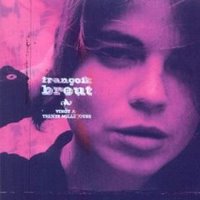 By the way, darn if Vingt à trente mille jours doesn't have one of the most attractive covers (and general sleeve designs) that I've ever seen...
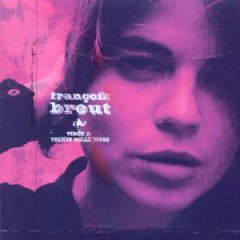 By the way, darn if Vingt à trente mille jours doesn't have one of the most attractive covers (and general sleeve designs) that I've ever seen...
Gene Wolfe - The Book of the New Sun (volume 1: "Shadow and Claw" and volume 2: "Sword and Citadel")
One night a little while back, I was in the mood for something easy to read and in an escapist vein, so I left work reasonably early and hit the city library for a browse; eventually, I settled on the first of these omnibus volumes (each contains two novels which were originally published separately - the first, The Shadow of the Torturer and The Claw of the Conciliator, and the second, The Sword of the Lictor and The Citadel of the Autarch), mainly because of the glowing endorsements on the back from Kim Stanley Robinson (who I haven't read) and Ursula Le Guin and George R R Martin (both of whom I have read and reckon are ace) and the blurb-y bit stating that it was "[r]ecently voted the greatest fantasy of all time, after The Lord of the Rings and The Hobbit".
And, indeed, it's good - twisting and sinister but never gratuitously so, written in a strikingly ornate and formal, and at times windily philosophical, style, and consistently gripping...pulling, as the adage goes, like a steam train while sketching in the internal landscape of the ambiguous hero, Severian the journeyman torturer, and the external world of Urth [and settings will seem strangely familiar], an echoed reverberation of our own society thousands if not millions of years in the future, in which high technology and interstellar contact mingle with neo-feudalism and medieval exigencies of survival and faith. There's a lot going on, too - apart from the philosophical musings about reality and truth, there is a graceful wreathing of unreliable narration and 'rememories' and other well-handled filigree, and again always well-integrated with the wider concerns of the story and series as a whole. It's strikingly literary without losing any of the power of the best epic fantasy to transport the reader to someplace else; I'd put it below Stephen Donaldson but would probably consider it to be pretty much as good as anything else out there in the field.
And, indeed, it's good - twisting and sinister but never gratuitously so, written in a strikingly ornate and formal, and at times windily philosophical, style, and consistently gripping...pulling, as the adage goes, like a steam train while sketching in the internal landscape of the ambiguous hero, Severian the journeyman torturer, and the external world of Urth [and settings will seem strangely familiar], an echoed reverberation of our own society thousands if not millions of years in the future, in which high technology and interstellar contact mingle with neo-feudalism and medieval exigencies of survival and faith. There's a lot going on, too - apart from the philosophical musings about reality and truth, there is a graceful wreathing of unreliable narration and 'rememories' and other well-handled filigree, and again always well-integrated with the wider concerns of the story and series as a whole. It's strikingly literary without losing any of the power of the best epic fantasy to transport the reader to someplace else; I'd put it below Stephen Donaldson but would probably consider it to be pretty much as good as anything else out there in the field.
Saturday, May 20, 2006
I Know I'm Not Alone
A fundraising screening for the Asylum Seeker Resource Centre, this sold out one of the Nova's large theatres, which has to be a good sign. I Know I'm Not Alone is a documentary, shot on hand-held camera and documenting Michael Franti's travels to Iraq and Palestine in an attempt to both reach out and to discover and present the effect of war and occupation on the ground, scored by Franti's music and put together quite roughly (although not affectedly so).
One of the film's strengths is the relatively low-key and non-polemical approach it takes; while Franti obviously has a point of view and the documentary's message isn't exactly veiled (it's both implicitly and explicitly dedicated to "the peacemakers"), it's pitched at a level of generality and presented in such a way - focusing on his interactions with the people he meets, be they soldiers, musicians, cab drivers or just plain folks - that it doesn't come across as at all strident, propagandist, or any of that bad stuff. (Moreover, I thought that it struck a good balance between Franti's celebrity and his desire to present a street level, relatively unmediated view of the societies and people he visits, mostly by acknowledging and even emphasising the centrality of music to his life and travels - and, thankfully, didn't push the authenticity [ie, "this is what it's really like over there"] line overtly at all.) Probably, though, that approach also undermines it to some extent by diminishing its impact.
At some point in Baghdad, Franti mentions that while he didn't have the time to write a whole song in Arabic, he thought he might still be able to break down some barriers by writing a song with just one Arab word - choosing "habibi", which apparently means something along the lines of "dear one" - and we then see him walking through the streets, playing the song as children sing along; later, it proves to be a hit in occupied Palestinian territory, too...for me, that whole thing encapsulates the documentary as a whole - eminently well-meaning and with its heart entirely in the right place, but somehow a bit too "be a world child form a circle" and just a bit wet.[*]
That said, though, my overall response was overwhelmingly positive; the world needs more films like this one.
* * *
[*] This last phrase being Wei's, who was there with Gary though I didn't see them on the night. I actually went with some of the others from the human rights law group at work - Leana, Vanessa, Eugenia, Rachel and one James McCa-- - with Swee Leng also along; I'd had dinner with the first three of those beforehand, whereat we'd quickly gone through a couple of bottles of the house red, possibly (in retrospect) resulting in our reception of the film being somewhat coloured, I suppose...
One of the film's strengths is the relatively low-key and non-polemical approach it takes; while Franti obviously has a point of view and the documentary's message isn't exactly veiled (it's both implicitly and explicitly dedicated to "the peacemakers"), it's pitched at a level of generality and presented in such a way - focusing on his interactions with the people he meets, be they soldiers, musicians, cab drivers or just plain folks - that it doesn't come across as at all strident, propagandist, or any of that bad stuff. (Moreover, I thought that it struck a good balance between Franti's celebrity and his desire to present a street level, relatively unmediated view of the societies and people he visits, mostly by acknowledging and even emphasising the centrality of music to his life and travels - and, thankfully, didn't push the authenticity [ie, "this is what it's really like over there"] line overtly at all.) Probably, though, that approach also undermines it to some extent by diminishing its impact.
At some point in Baghdad, Franti mentions that while he didn't have the time to write a whole song in Arabic, he thought he might still be able to break down some barriers by writing a song with just one Arab word - choosing "habibi", which apparently means something along the lines of "dear one" - and we then see him walking through the streets, playing the song as children sing along; later, it proves to be a hit in occupied Palestinian territory, too...for me, that whole thing encapsulates the documentary as a whole - eminently well-meaning and with its heart entirely in the right place, but somehow a bit too "be a world child form a circle" and just a bit wet.[*]
That said, though, my overall response was overwhelmingly positive; the world needs more films like this one.
* * *
[*] This last phrase being Wei's, who was there with Gary though I didn't see them on the night. I actually went with some of the others from the human rights law group at work - Leana, Vanessa, Eugenia, Rachel and one James McCa-- - with Swee Leng also along; I'd had dinner with the first three of those beforehand, whereat we'd quickly gone through a couple of bottles of the house red, possibly (in retrospect) resulting in our reception of the film being somewhat coloured, I suppose...
Clive Hamilton - "What's Left? The Death of Social Democracy" (Quarterly Essay issue 21)
Hamilton's argument here is simple but, if made out, far-reaching in its implications. In essence, his claim is that the old social democratic ideology to which progressive political parties in the West - including the ALP - have traditionally been committed is, in societies such as Australia where affluence rather than material deprivation is the norm, no longer a meaningful or viable platform for social change or political relevance, and he makes the case for that central proposition lucidly and elegantly, tying it up with a closely related argument as to the contemporary irrelevance and obsolescence of the ALP; suggesting that "the defining problem of modern industrial society is not injustice but alienation, and that the central task of progressive politics today is to achieve not equality, but liberation", he argues that the old left paradigm needs to be replaced with a 'politics of wellbeing' focused on a cluster of values including fulfilling work, strong communities, and a turn away from the market and commodity culture, rather than on economic growth.
I found Hamilton's argument basically convincing, but there are at least a couple of dubious moves in it. Here's one:
And here's another problematic one:
I also had some problems with the focus on "liberation" rather than "equality" but I'm kind of running out of steam here, plus it was more than a week ago now that I finished reading the essay, so may leave that one for now...
More generally, it's interesting to see the ways in which Hamilton remains beholden to the traditional framework and language of the left - his comment that "[t]he Australian Labor Party has served its historical purpose and will wither and die as the progressive force of Australian politics" inevitably brings to mind Marx's insistence on the historical inevitability of the downfall of capitalism (although Hamilton does - rather unsatisfactorily, I think - sort of attempt to address this one in passing), while his focus on liberation cannot but recall Marx's diagnoses of alienation and commodity fetishism, not to mention the old rouser "[t]he proletarians have nothing to lose but their chains".
Hm. So I enjoyed reading this and, all in all, thought it was very good - it's well written and pleasingly presented, and, as I said, it's largely convincing and provides much food for thought. Nice!
I found Hamilton's argument basically convincing, but there are at least a couple of dubious moves in it. Here's one:
the concerns that motivated social democracy - poverty, inequality and exploitation - are, as a result of affluence, now confined to a small proportion of the population, no more than 20 per cent. While the moral imperative to improve the circumstances of this group remains - indeed, in the face of widespread affluence, it has even greater force - the circumstances of 20 per cent of the population cannot provide the basis for a politics of social transformation in the twenty-first century.My concern with that passage - which obviously represents a key step in his overall argument - is the assumption that the impoverished circumstances of a full 20 per cent of the population (that's one in five, kids - a small matter of some four million people across Australia) doesn't represent a viable wedge for contemporary progressive politics. Presumably he puts this up as a pragmatic 'recognition' of people's essential self-interestedness - he's careful (and quite right) to note that our collective moral responsibility is undiminished by the economic sea change - but I'm just not sure it's as clear-cut as Hamilton suggests, even on the terms that he seems to be proposing...there seem to be some pretty large assumptions at work there.
And here's another problematic one:
Yet this attribution of economic injustice and minority oppression to the structure of capitalism proved to be wrong. While the battles have been fierce and problems remain, this way of characterising capitalism in rich countries like Australia is no longer defensible. If this is true, the principal problem of capitalism is no longer injustice.Now, assuming that Hamilton's claim about the prevailing level of affluence in countries like Australia is justified - he spends a bit of time defending the claim and it's probably reasonable to go with it - that passage looks to be, on its face, fair enough. But the problem with it is the assumption that Australia can be considered in isolation from the global (capitalist) system - which, of course, it can't be, for it seems not only logically possible but positively likely that the affluence of nations such as Australia has come about through the operation of the capitalist system to the detriment of other, less powerful and industrialised nations, thus perpetuating the old injustices and imbalances except on a larger, more general scale...meaning that Hamilton's prescription, even if made out on its own terms, can succeed only by turning a blind eye to the larger picture of systematic exploitation (thus opening itself to many of the same criticisms as those which he levels at the so-called 'Third Way' of Tony Blair and co). Maybe that's the only pragmatic thing to do, and perhaps a genuine national focus on some kind of "politics of wellbeing" would be a step forward and a step towards addressing those larger issues to do with capitalism on an international level - but even if so, this, to me, seems to call for serious thought.
I also had some problems with the focus on "liberation" rather than "equality" but I'm kind of running out of steam here, plus it was more than a week ago now that I finished reading the essay, so may leave that one for now...
More generally, it's interesting to see the ways in which Hamilton remains beholden to the traditional framework and language of the left - his comment that "[t]he Australian Labor Party has served its historical purpose and will wither and die as the progressive force of Australian politics" inevitably brings to mind Marx's insistence on the historical inevitability of the downfall of capitalism (although Hamilton does - rather unsatisfactorily, I think - sort of attempt to address this one in passing), while his focus on liberation cannot but recall Marx's diagnoses of alienation and commodity fetishism, not to mention the old rouser "[t]he proletarians have nothing to lose but their chains".
Hm. So I enjoyed reading this and, all in all, thought it was very good - it's well written and pleasingly presented, and, as I said, it's largely convincing and provides much food for thought. Nice!
Spoon - Girls Can Tell
Only a few songs into this one, I found myself thinking very similar thoughts to those which struck me when I was first hearing the band's latest, Gimme Fiction - basically, thoughts about how great Spoon are. I don't know what it is - again, there's just something about them which makes their music a simple joy. I've just realised that one of the funnest incidents of the stripped-back approach they take is spotting the flashes and echoes of their (often quite dissimilar) antecedents in the rock family tree - and so it is that at one moment, with the guitar riff that steps in "The Fitted Shirt", they recall Led Zeppelin's "Kashmir", and then, two songs later, the guitar parts are coming across all Smiths on the jangle and circle of "Take A Walk", and so on. Mebbe these guys are just making the quintessential bedsit rock n roll for the kids of today - whatever it is, Girls Can Tell is utterly ace.
Saturday, May 13, 2006
Siri Hustvedt - A Plea For Eros
Names can be misleading, especially if - like me - your grasp of their provenance is, ahem, on the loose side. Still, having just finished reading this collection of essays written by her, I think that Siri Hustvedt would likely be amused and interested by my misapprehension, based on her name, that she was of Indian background (a belief which obviously owed rather more to the 'Siri' than the 'Hustvedt')...
One could probably get some way towards understanding why I enjoyed these essays by considering a list of Hustvedt's preoccupations, which include but are not limited to:
- liminality and interstitiality (forgive the jargon - sometimes it really is the best way to express something);
- imagination and reality (and the relationship between them, natch);
- memory and the present moment (ie, and/in);
- language and Everything (see immediately above);
- images and the self (and psychoanalytic such-and-suchness);
- people and the spaces between them (see all of the above);
- et cetera (not to mention her ability to write about The Great Gatsby with genuine insight and feeling).
I sometimes felt as if I was reading a less precious ("less precious" = better, in this context) Jeanette Winterson, which made me feel a bit ambivalent in light of my current perspective on, and past infatuations, with (the writing of) said JW, but I suppose it comes with the terrain of writing in this kind of abstract, philosophical, 'postmodern', overtly personally-informed vein.
Skipped the ones on The Bostonians and Our Mutual Friend, not having read either (even though I knew that Hustvedt would cover much more than merely the texts of those novels in her excursions around them), but very much enjoyed the piece on Gatsby (not least for the light it sheds on the curious way in which the novel is framed by its opening - the narrator's memory of his father's words, "Whenever you feel like criticising anyone, remember that all the people in this world haven't had the advantages that you've had"); those are the only explicitly literature-focused ones, and elsewhere Hustvedt, amongst other things: provides a potted family and personal history (in "Yonder" which, like the word which gives the essays its the title, enacts a continual slippage from one point - or scene - to another, over and over); uses her experiences wearing a corset as a film extra as a jumping-off point for a meditation on clothing, identity and imagination; and makes the case for what she calls 'eros', the mystery and uncertainty which always abides at the heart of love and sexual attraction.
So I didn't find these essays particular remarkable or wonderful or amazing, but they're good and I feel a better person (again with the self-improvement!) for having read them. Next up (so far as Hustvedt goes): What I Loved.
One could probably get some way towards understanding why I enjoyed these essays by considering a list of Hustvedt's preoccupations, which include but are not limited to:
- liminality and interstitiality (forgive the jargon - sometimes it really is the best way to express something);
- imagination and reality (and the relationship between them, natch);
- memory and the present moment (ie, and/in);
- language and Everything (see immediately above);
- images and the self (and psychoanalytic such-and-suchness);
- people and the spaces between them (see all of the above);
- et cetera (not to mention her ability to write about The Great Gatsby with genuine insight and feeling).
I sometimes felt as if I was reading a less precious ("less precious" = better, in this context) Jeanette Winterson, which made me feel a bit ambivalent in light of my current perspective on, and past infatuations, with (the writing of) said JW, but I suppose it comes with the terrain of writing in this kind of abstract, philosophical, 'postmodern', overtly personally-informed vein.
Skipped the ones on The Bostonians and Our Mutual Friend, not having read either (even though I knew that Hustvedt would cover much more than merely the texts of those novels in her excursions around them), but very much enjoyed the piece on Gatsby (not least for the light it sheds on the curious way in which the novel is framed by its opening - the narrator's memory of his father's words, "Whenever you feel like criticising anyone, remember that all the people in this world haven't had the advantages that you've had"); those are the only explicitly literature-focused ones, and elsewhere Hustvedt, amongst other things: provides a potted family and personal history (in "Yonder" which, like the word which gives the essays its the title, enacts a continual slippage from one point - or scene - to another, over and over); uses her experiences wearing a corset as a film extra as a jumping-off point for a meditation on clothing, identity and imagination; and makes the case for what she calls 'eros', the mystery and uncertainty which always abides at the heart of love and sexual attraction.
So I didn't find these essays particular remarkable or wonderful or amazing, but they're good and I feel a better person (again with the self-improvement!) for having read them. Next up (so far as Hustvedt goes): What I Loved.
The Fire Show - The Fire Show
Edgy, jagged, ambitious and frequently grandiose indie-rock - puts me a wee bit in mind of the Arcade Fire, though both more punk and more prog (please note, dear reader, that neither of these are generally good things in my books), and with more of a penchant for electronic samples and scratchy riffage than baroque chamber arrangements, and without the unerring dirge momentum either within individual songs or across the record as a whole. Actually predates Funeral by several years, though - I heard and got into "The Antipathetic" back in the audiogalaxy days (I always refer to that time, and I still have many of the mp3s on my old laptop as obvious references, but my sense of how they actually fit in with the rest of my personal chronology, even to the extent of knowing what years they spanned, is extremely shaky) and its restless, fiery urgency has left me wanting to hear more ever since. Provisional verdict, having had it for some weeks but during a period in which I've been still very much swinging away from the guitar rock, is that it's pretty good if maybe a bit bratty for my taste.
Michael Chabon - The Amazing Adventures of Kavalier & Clay
I wonder whether Chabon was tempted to entitle this 'The Escapist' - to a certain cast of mind, its punchiness and the double-meaning it embodies would surely have appealed. In any event, if the thought did cross his mind, he chose well in going with the novel's actual title, which more effectively gets across the duality (or even trebling, depending on how you read the text) which is at work within it, concerning the relationship between life and art, by means of the comic book.
So far as my reasons for reading Kavalier & Clay go, it wasn't the most auspicious beginning. I met a guy at some party - Ben T, a friend of Nenad's - who was at the centre of a book club (these things are springing up like mushrooms after the rain) and invited me along. The club's first text for discussion had been The Catcher in the Rye and the one immediately coming up at the time was a Bukowski, which, taken together, seemed to me to establish a rather worrying trend (all a bit determinedly counter-cultural for me, and besides I was only lukewarm on Catcher - despite having read it in high school, which ought to've been the perfect time for the book - and detested the Bukowski that I read a while back); but, a few weeks on, they got the word through to me that the next book would be Kavalier & Clay, and since I'd been vaguely intending to read it anyway and besides book clubs are fun with a capital 'f', I picked up a copy...then, as these things go, I got distracted and didn't start it until a couple of days before the meeting, which I promptly missed.
Turns out that the delay was my loss, though. Kavalier & Clay is one of those immensely easy-to-read, page-turning novels that makes you feel the whole way through - it's littered with these little peaks of sadness, and the cumulative effect is, well, effective...despite the frequent breeziness of its tone, I always felt that the book earned its emotional payoffs. Somehow, it happens without any particular signposting on Chabon's part but nor does it ever feel peremptory or abrupt - it's almost as if the moment of affect or sadness is experienced only as it is passing, and never as a particular static moment of presence (a rather metaphysical way of trying to express it, but that's the best I can do after a day at work followed by stand-up cocktail party). The more you think about it afterwards, the more it hits you. Anyway, however it's done, it works really well.
Cracking yarn as well. Picks up two major characters - the titular Joe Kavalier and Sammy Clay - and puts them through their paces, drawing in a colourful and sympathetically-observed gallery of others, unfolding satisfyingly and often in unexpected directions. Doesn't shy away from a large canvas, and happy to play with history and narrative in a generally unobtrusive but effective fashion. And did I mention that it's funny, too?
PS: Literature (well, art in general) can make you a better person. Lately, I've been feeling - for the first time - that I've really felt and taken some small steps towards grasping the horror and the sadness and, probably even more so, the sheer scale of the waste, of war (with the usual caveat re: the extent to which this is possible for someone who's never had any actual experience of war itself)...I mean, of course I've always known this, but it's only quite recently that that 'knowledge' has really been moored in something - even this kind of imaginative, as opposed to first-hand or 'real life', terrain - and I think that this rather belated flowering, if you can call it that, is mostly due to some of the stuff I've been exposed to lately, this novel and perhaps Everything Is Illuminated, and others that I can't call to mind right now, and maybe even The White Hotel operating in the background...
So far as my reasons for reading Kavalier & Clay go, it wasn't the most auspicious beginning. I met a guy at some party - Ben T, a friend of Nenad's - who was at the centre of a book club (these things are springing up like mushrooms after the rain) and invited me along. The club's first text for discussion had been The Catcher in the Rye and the one immediately coming up at the time was a Bukowski, which, taken together, seemed to me to establish a rather worrying trend (all a bit determinedly counter-cultural for me, and besides I was only lukewarm on Catcher - despite having read it in high school, which ought to've been the perfect time for the book - and detested the Bukowski that I read a while back); but, a few weeks on, they got the word through to me that the next book would be Kavalier & Clay, and since I'd been vaguely intending to read it anyway and besides book clubs are fun with a capital 'f', I picked up a copy...then, as these things go, I got distracted and didn't start it until a couple of days before the meeting, which I promptly missed.
Turns out that the delay was my loss, though. Kavalier & Clay is one of those immensely easy-to-read, page-turning novels that makes you feel the whole way through - it's littered with these little peaks of sadness, and the cumulative effect is, well, effective...despite the frequent breeziness of its tone, I always felt that the book earned its emotional payoffs. Somehow, it happens without any particular signposting on Chabon's part but nor does it ever feel peremptory or abrupt - it's almost as if the moment of affect or sadness is experienced only as it is passing, and never as a particular static moment of presence (a rather metaphysical way of trying to express it, but that's the best I can do after a day at work followed by stand-up cocktail party). The more you think about it afterwards, the more it hits you. Anyway, however it's done, it works really well.
Cracking yarn as well. Picks up two major characters - the titular Joe Kavalier and Sammy Clay - and puts them through their paces, drawing in a colourful and sympathetically-observed gallery of others, unfolding satisfyingly and often in unexpected directions. Doesn't shy away from a large canvas, and happy to play with history and narrative in a generally unobtrusive but effective fashion. And did I mention that it's funny, too?
PS: Literature (well, art in general) can make you a better person. Lately, I've been feeling - for the first time - that I've really felt and taken some small steps towards grasping the horror and the sadness and, probably even more so, the sheer scale of the waste, of war (with the usual caveat re: the extent to which this is possible for someone who's never had any actual experience of war itself)...I mean, of course I've always known this, but it's only quite recently that that 'knowledge' has really been moored in something - even this kind of imaginative, as opposed to first-hand or 'real life', terrain - and I think that this rather belated flowering, if you can call it that, is mostly due to some of the stuff I've been exposed to lately, this novel and perhaps Everything Is Illuminated, and others that I can't call to mind right now, and maybe even The White Hotel operating in the background...
Sunday, May 07, 2006
The Concretes - In Colour
It's true, I was all excited about this one. I'd heard "On The Radio" and "Chosen One", and both are sugar-rush delights, Victoria Bergsman's engaging rasp trilling over a luscious weave of modern retro-inspired pop sounds. But, taken over the length of a whole album, In Colour doesn't quite stand up - its joys lie in the details and the overall aesthetic, but too often the melodies aren't there. The two I've already mentioned are wonderful, "Change In The Weather" has something of the same simple thrill to its chorus, "Fiction" pretty much gets the extended buildup thing right, and closer "Song For The Songs" hits the spot, too, but everything else kinda blurs.
I'm also not sure how well the band is served by the somewhat smoother production job which has been done on this record when compared to their debut, self-titled lp. I think that it tends to flatten out some of their best and most distinctive traits - the clanging Velvet Underground guitars and the blare of Bergsman's vocals in particular, and the contrast that those elements set up with the pop sweetness of the melodies, and so there's nothing like, say, the measuredly cacophonous swing of "Say Something New", the two-minute blast of "You Can't Hurry Love" or the desperate swoon of "Lonely As Can Be" on this new record.
When all's said and done, it's still a new Concretes album and it's still just fine (also, the packaging is impeccable, which never hurts...and yes, it's still an article of faith on my part that Scandinavian pop music makes the world a better place!) - it's just that, when compared to its predecessor, In Colour is a bit of a disappointment.
I'm also not sure how well the band is served by the somewhat smoother production job which has been done on this record when compared to their debut, self-titled lp. I think that it tends to flatten out some of their best and most distinctive traits - the clanging Velvet Underground guitars and the blare of Bergsman's vocals in particular, and the contrast that those elements set up with the pop sweetness of the melodies, and so there's nothing like, say, the measuredly cacophonous swing of "Say Something New", the two-minute blast of "You Can't Hurry Love" or the desperate swoon of "Lonely As Can Be" on this new record.
When all's said and done, it's still a new Concretes album and it's still just fine (also, the packaging is impeccable, which never hurts...and yes, it's still an article of faith on my part that Scandinavian pop music makes the world a better place!) - it's just that, when compared to its predecessor, In Colour is a bit of a disappointment.
The Believer Book of Writers Talking to Writers edited by Vendela Vida
Exactly what its title suggests, a collection of writers talking to other writers. Each conversation is one on one, with one writer having selected the other as their partner/subject, meaning that it's generally an up-and-comer (if you consider the likes of Dave Eggers, Zadie Smith and Jonathan Lethem to be up-and-comers) interviewing a more established writer who they particularly admire (and, in many cases, seemingly have been strongly influenced by); it being writers talking to writers, the topic of conversation is, more often than not, writing, and often - and these are the ones that I enjoyed the most - at quite a general level, asking Big Questions along the lines of "what is the role of the writer in society today?", "how should we write?", and so on.
I've been carrying this book around for months now (I've been stalled halfway through the last one, with Tobias Wolff - that name brings back the memories! - for weeks, having been distracted by other things), and the details of most of the conversations aren't fresh in my mind any more, but naturally I was drawn to the pieces involving writers with whose work I'm familiar to greater or lesser extents - those involving Paul Auster, Haruki Murakami and Tom Stoppard in particular. Ben Ehrenreich's conversation with John Banville is a bit of a highlight; and Zadie's engaging ramblings in company with Ian McEwan are also well worth the reading. Apart from those, the one which left the largest impression is Thisbe Nissen's talk with Siri Hustvedt, in which everything that the latter said made me think that I couldn't possibly not like her novels (none of which I've read before).
Anyway, as I said, the details have largely fled my conscious memory by now, but I'm sure that the insights and inspirations with which these conversations are liberally scattered have lodged somewhere in my mind, where they'll operate to my benefit and edification. It really is fascinating to read what these brilliant writers have to say about their craft, and how they arrived at and continued to approach their current points as writers, and not a little reassuring into the bargain.
* * *
My own writing continues, slowly. I think that the best way to write a novel would probably be to forge ahead as quickly as possible, just putting the words on the page at the time and only later returning to hone and craft them to whatever contingent perfection might be possible, but I don't seem capable of that wilful initial neglect - instead, I find myself painstakingly working and reworking individual paragraphs, sentences, phrases, as I go. (In particular, the attempt to stick as closely as possible to a phenomenological account is giving me serious grief.)
I've been thinking about the novels which have been, whether or not I've been aware of it, serving as touchstones for me throughout this whole writing process, and have come up with The Secret History, The Great Gatsby, To The Lighthouse, A Wild Sheep Chase and Hard-Boiled Wonderland and the End of the World; each of those is a touchstone for me as a reader and as a person, but there's something about them which also moves and inspires me in my writing, and I find myself recurring to them over and over and over again.
* * *
Incidentally, I noticed that the review of The Secret River written by the person who sat in on our Contemporary Historical Fictions seminar last year has come out in the latest Meanjin and was vaguely happy to notice a footnoted acknowledgement of Clara Tuite and her honours seminar for sharing ideas at an early stage.
* * *
This may also be a good place to set down another reading list for the next few months / indefinite future, based on recentish recommendations and general 'ought to read for one reason or anothers', more or less in order:
* Ali Smith - The Accidental [because it seems like absolutely everyone is talking about this one - and see here]
* William Faulkner - The Sound and the Fury [because I've been mucking around with what I've been thinking of as 'floating dialogue' lately, and Wei tells me that Faulkner does something similar, plus he's been recommended to me in the past]
* Siri Hustvedt - What I Loved [see above]
* Sarah Waters - Night Watch [because Waters is fab and this one seems to be making waves - inter alia, shortlisted for the Orange prize, I noticed]
* Joyce Carol Oates - Them
* Nicole Krauss - The History of Love
* George Eliot - The Mill on the Floss or Middlemarch
* Ralph Ellison - The Invisible Man
* And, of course, Swann's Way - but then no one, least of all myself, really expects me to actually read the thing any time soon.
I've been carrying this book around for months now (I've been stalled halfway through the last one, with Tobias Wolff - that name brings back the memories! - for weeks, having been distracted by other things), and the details of most of the conversations aren't fresh in my mind any more, but naturally I was drawn to the pieces involving writers with whose work I'm familiar to greater or lesser extents - those involving Paul Auster, Haruki Murakami and Tom Stoppard in particular. Ben Ehrenreich's conversation with John Banville is a bit of a highlight; and Zadie's engaging ramblings in company with Ian McEwan are also well worth the reading. Apart from those, the one which left the largest impression is Thisbe Nissen's talk with Siri Hustvedt, in which everything that the latter said made me think that I couldn't possibly not like her novels (none of which I've read before).
Anyway, as I said, the details have largely fled my conscious memory by now, but I'm sure that the insights and inspirations with which these conversations are liberally scattered have lodged somewhere in my mind, where they'll operate to my benefit and edification. It really is fascinating to read what these brilliant writers have to say about their craft, and how they arrived at and continued to approach their current points as writers, and not a little reassuring into the bargain.
* * *
My own writing continues, slowly. I think that the best way to write a novel would probably be to forge ahead as quickly as possible, just putting the words on the page at the time and only later returning to hone and craft them to whatever contingent perfection might be possible, but I don't seem capable of that wilful initial neglect - instead, I find myself painstakingly working and reworking individual paragraphs, sentences, phrases, as I go. (In particular, the attempt to stick as closely as possible to a phenomenological account is giving me serious grief.)
I've been thinking about the novels which have been, whether or not I've been aware of it, serving as touchstones for me throughout this whole writing process, and have come up with The Secret History, The Great Gatsby, To The Lighthouse, A Wild Sheep Chase and Hard-Boiled Wonderland and the End of the World; each of those is a touchstone for me as a reader and as a person, but there's something about them which also moves and inspires me in my writing, and I find myself recurring to them over and over and over again.
* * *
Incidentally, I noticed that the review of The Secret River written by the person who sat in on our Contemporary Historical Fictions seminar last year has come out in the latest Meanjin and was vaguely happy to notice a footnoted acknowledgement of Clara Tuite and her honours seminar for sharing ideas at an early stage.
* * *
This may also be a good place to set down another reading list for the next few months / indefinite future, based on recentish recommendations and general 'ought to read for one reason or anothers', more or less in order:
* Ali Smith - The Accidental [because it seems like absolutely everyone is talking about this one - and see here]
* William Faulkner - The Sound and the Fury [because I've been mucking around with what I've been thinking of as 'floating dialogue' lately, and Wei tells me that Faulkner does something similar, plus he's been recommended to me in the past]
* Siri Hustvedt - What I Loved [see above]
* Sarah Waters - Night Watch [because Waters is fab and this one seems to be making waves - inter alia, shortlisted for the Orange prize, I noticed]
* Joyce Carol Oates - Them
* Nicole Krauss - The History of Love
* George Eliot - The Mill on the Floss or Middlemarch
* Ralph Ellison - The Invisible Man
* And, of course, Swann's Way - but then no one, least of all myself, really expects me to actually read the thing any time soon.
Saturday, May 06, 2006
In The Aeroplane Over The Sea, again
Listening to "The King of Carrot Flowers Pt One" just now, it came to me that In The Aeroplane Over The Sea would be a good record to which to fall in love; I can't justify the feeling, but of course feelings don't need to be justified, least of all those like this one.
If I had discovered and gotten into this album in high school, I probably would've pored over it in the way that I did with OK Computer and other totems of that time, subjecting it to endless musical and lyrical exegesis; today, I'm more inclined to just let it affect me, holding myself open to it just as the record itself seems to endlessly unfurl, both revealing and obscuring more of itself at every turn.
I've referred to it to a couple of people lately as the last album that changed my life (I'm not above a bit of imprecision in the interests of making a point), and I think it's telling that when they, naturally enough, have asked me what it sounds like, I've found myself unable to give any real sense of the thing...to do it justice, it seems more useful to try to give a sense of the record's effect than to focus on the sound of the music itself - although I wonder how useful it is for interested interlocutors to be met with a stream of "it's just so great, and it makes me happy and sad all at once and I find myself singing and humming bits of it at inappropriate moments and I can't explain it but it stirs me", etc, etc...
Anyway, all that being the case, it's probably unsurprising that I don't have anything more to say right now...it makes me dizzy.
* * *
(Bought the album today (gorgeous sleeve design, too) - as good a reason as any to set down a few more of my thoughts and feelings about it. I really believe that cds sound better than mp3s - and if it's just my imagination, well, what difference does that make?)
If I had discovered and gotten into this album in high school, I probably would've pored over it in the way that I did with OK Computer and other totems of that time, subjecting it to endless musical and lyrical exegesis; today, I'm more inclined to just let it affect me, holding myself open to it just as the record itself seems to endlessly unfurl, both revealing and obscuring more of itself at every turn.
I've referred to it to a couple of people lately as the last album that changed my life (I'm not above a bit of imprecision in the interests of making a point), and I think it's telling that when they, naturally enough, have asked me what it sounds like, I've found myself unable to give any real sense of the thing...to do it justice, it seems more useful to try to give a sense of the record's effect than to focus on the sound of the music itself - although I wonder how useful it is for interested interlocutors to be met with a stream of "it's just so great, and it makes me happy and sad all at once and I find myself singing and humming bits of it at inappropriate moments and I can't explain it but it stirs me", etc, etc...
Anyway, all that being the case, it's probably unsurprising that I don't have anything more to say right now...it makes me dizzy.
* * *
(Bought the album today (gorgeous sleeve design, too) - as good a reason as any to set down a few more of my thoughts and feelings about it. I really believe that cds sound better than mp3s - and if it's just my imagination, well, what difference does that make?)
Stendhal - Scarlet and Black
I happened to be chatting with Sarah V just after I'd gotten to the midway point of this novel (the end of part 1) and at the time I said that it had, thus far, confounded and delighted me; her response was that I hadn't seen anything yet...I mention this because, taken as a whole, that little conversational snippet pretty neatly sums up my response to Scarlet and Black. I enjoyed it greatly and was pulled along by it despite my unfamiliarity with the milieu it depicts - early-mid 19th century France, moving from the provinces to the glittering drawing rooms of Paris and back, the nation still gasping after the changes brought by Napoleon and rent by the increasingly gaping chasm between the Liberals and the Ultra-Royalists, the Church (and its internescine disputes) a shadowy but overt influence over everything. Tone is lucid and witty in the novel's observation of manners and mores and the depictions are severely cutting in many respects; characters are revealed to us and follow their own developmental arcs concurrently and Julien, Madame de Rênal and Mathilde are all psychologically complex and believable figures...Stendhal tells us much and (I think) shows us more, but still we're left wondering about some of their actions, only to find our answer in the intensity of the passions, conflicts and inevitabilities which grip and impel them and the extremities of their characters.
To me, Julien seemed a bit of a Steerpike character, though more sympathetically rendered - almost a pure embodiment of will, endlessly calculating and manipulative, powerfully driven and utterly relentless, forcing his way by main cunning upwards from the lower echelons of a society bound by suffocating tradition, rigid hierarchy and decaying splendour. The difference, needless to say, is the role played by love and affection in Scarlet and Black; in the end, it's that as much as, and in conjunction with, the class divide which bring him undone - and then, too, that which has a (precisely?) commensurate role in Julien's coming into himself as, I think, a self-realised, admirable and tragic figure at the end. (Shades of The Outsider in the ending, too.)
Also - does every single work of French literature feature direct addresses to the reader by the author? Its recurrence here made me wonder if there was something about the language that made its writers more - or earlier - inclined to efface that assumed boundary -- but that's a thought to be pursued another day, I think.
To me, Julien seemed a bit of a Steerpike character, though more sympathetically rendered - almost a pure embodiment of will, endlessly calculating and manipulative, powerfully driven and utterly relentless, forcing his way by main cunning upwards from the lower echelons of a society bound by suffocating tradition, rigid hierarchy and decaying splendour. The difference, needless to say, is the role played by love and affection in Scarlet and Black; in the end, it's that as much as, and in conjunction with, the class divide which bring him undone - and then, too, that which has a (precisely?) commensurate role in Julien's coming into himself as, I think, a self-realised, admirable and tragic figure at the end. (Shades of The Outsider in the ending, too.)
Also - does every single work of French literature feature direct addresses to the reader by the author? Its recurrence here made me wonder if there was something about the language that made its writers more - or earlier - inclined to efface that assumed boundary -- but that's a thought to be pursued another day, I think.
Eva Cassidy - Songbird
I can't imagine that repetition could ever diminish the charm of the renditions on this record - they're so pure and lovely and in every way perfect. At risk of sounding mawkish, I feel that the music on Songbird (like all of Cassidy's music) is very affirmatory - and somehow all the more so in light of the singer's sadly untimely death.
Neil Finn - Try Whistling This
One of those albums from my late high school years whose singles summon a raft of associations and memories. One is of all those mornings and after-schools riding on the school bus with Daniel L, talking about music and sometimes other things, too (I wonder what became of him - last I heard, he was trying to make it as a journalist) - I have a distinct memory of his saying, in relation to this album (which would've been shortly after its release), that it made it clear that 'those other guys' had just been holding Neil Finn back during his Crowded House years. Another is quite simply to do with the song "Sinner" itself and how its gentle, melodic, quietly mysterious fluidity made me feel during those stormy days. Listening to it now, and particularly the run of singles in the first half of the middle of the record - "Try Whistling This", "She Will Have Her Way", "Sinner" - is a pleasant, contentment-inducing experience, Finn's quietly timeless rock-pop still retaining the particular colour and grace which has always distinguished it in my mind.
Sunday, April 30, 2006
"Everyone kisses a stranger": Françoiz Breut @ the Corner Hotel, Saturday 29 April
This was a show, I think, that meant something different to everyone who saw it, but I can't imagine that anyone who was there could have not responded to the music in some meaningful way. Actually with me was a rag-tag and fun posse -- it went like this: ages ago, Ruth mentioned that she and a friend (one Kate) were seeing the show and asked if I was interested; I was interested and spread the word to others (Swee Leng, Meribah and Romesh saying 'aye'); later still, mentioned it to Jarrod and some of the other ACs (Nicolette + friend Natalie, and Patrick, coming along); on the night, Romesh was ill so I passed his ticket on to Keith -- and I'm pretty sure that everyone was feeling it (along with the rest of the crowd if the general enthusiasm, atmosphere and demand for more was anything to go by).
Well, I definitely felt it. I hadn't heard much of Breut's stuff before last night - just a couple of songs here and there, and occasionally as background music at various parties, etc - but it swept me up from the very first song. The setup was neat - Françoiz, tall and thin, dark hair whimsically arranged and resplendent in black dress, at the microphone, guitarist plugged in and seated at a modified drumkit, backing track spinning on vinyl between them - and the music captivating from the first number, broody and light at the same time, shadowy and whimsical, rainy-day (or night) and prettily winsome. She sang mostly in French (sometimes, charmingly, proffering a translation before starting), with a few songs partly or fully in English and one in Spanish, mostly in a husky sing-song but sometimes reaching for and finding higher notes and lines, especially when doing harmonies, standing at the microphone and seeming to give herself to each song, swaying, leaning, gesturing, from time to time stepping briefly away to circle, shimmy and handclap when the instrumental breakdowns came in; between numbers, she smiled and basically charmed the audience every step of the way (right down to sitting on the stage after the show to talk to people and sign things).
What little I'd heard before the show had led me to expect something like a cross between Françoise Hardy and Mazzy Star with a dash of torch, and that didn't prove to be a mile off the mark (one of the songs I recognised, "Le Premier Bonheur Du Jour", was, of course, made famous by Hardy), though nor was it entirely accurate, even to the extent that these awkward musical analogies ever are. There was definitely a strong 60s influence, taking in both the sweetness-shaded-by-angst of the French girl singers of the time (instrumentation including, at various points, one of those mouth keyboard things the real name of which no one knows but whose mournful clarinet-type sound is instantly recognisable (Isobel Campbell uses it to great effect on Amorino), miniature xylophone, sundry other percussion, and programmed beats and sampled orchestral swoops on the backing track) and the early rock n roll garage clatter and clangour created by clean, straight up electric guitar and basic drumkit played in tandem (downstrokes of the guitar often falling on the same beat as the cymbals, that kind of thing). Fittingly, then, songs generally short but, as they say, perfectly formed.
...which is all just so much circling around the main point, which is that the concert was quite the lovely and delightful experience.
* * *
Support had earlier been provided by Dave Graney and Clare Moore (along with a third whose name escapes me) who were obviously an act worth taking in in their own right; they were pretty good, and I liked the showmanship, but I wasn't really paying attention and what I caught didn't especially grab me.
Well, I definitely felt it. I hadn't heard much of Breut's stuff before last night - just a couple of songs here and there, and occasionally as background music at various parties, etc - but it swept me up from the very first song. The setup was neat - Françoiz, tall and thin, dark hair whimsically arranged and resplendent in black dress, at the microphone, guitarist plugged in and seated at a modified drumkit, backing track spinning on vinyl between them - and the music captivating from the first number, broody and light at the same time, shadowy and whimsical, rainy-day (or night) and prettily winsome. She sang mostly in French (sometimes, charmingly, proffering a translation before starting), with a few songs partly or fully in English and one in Spanish, mostly in a husky sing-song but sometimes reaching for and finding higher notes and lines, especially when doing harmonies, standing at the microphone and seeming to give herself to each song, swaying, leaning, gesturing, from time to time stepping briefly away to circle, shimmy and handclap when the instrumental breakdowns came in; between numbers, she smiled and basically charmed the audience every step of the way (right down to sitting on the stage after the show to talk to people and sign things).
What little I'd heard before the show had led me to expect something like a cross between Françoise Hardy and Mazzy Star with a dash of torch, and that didn't prove to be a mile off the mark (one of the songs I recognised, "Le Premier Bonheur Du Jour", was, of course, made famous by Hardy), though nor was it entirely accurate, even to the extent that these awkward musical analogies ever are. There was definitely a strong 60s influence, taking in both the sweetness-shaded-by-angst of the French girl singers of the time (instrumentation including, at various points, one of those mouth keyboard things the real name of which no one knows but whose mournful clarinet-type sound is instantly recognisable (Isobel Campbell uses it to great effect on Amorino), miniature xylophone, sundry other percussion, and programmed beats and sampled orchestral swoops on the backing track) and the early rock n roll garage clatter and clangour created by clean, straight up electric guitar and basic drumkit played in tandem (downstrokes of the guitar often falling on the same beat as the cymbals, that kind of thing). Fittingly, then, songs generally short but, as they say, perfectly formed.
...which is all just so much circling around the main point, which is that the concert was quite the lovely and delightful experience.
* * *
Support had earlier been provided by Dave Graney and Clare Moore (along with a third whose name escapes me) who were obviously an act worth taking in in their own right; they were pretty good, and I liked the showmanship, but I wasn't really paying attention and what I caught didn't especially grab me.
Songs of moments present and past: Stars - "Elevator Love Letter" & Jens Lekman - "Black Cab" / The music they play in bars
The song I'm most likely to be listening to over and over right now is Stars' "Elevator Love Letter", off their Heart album (which I haven't listened to). It's a simple little thing, really, a trilling Stars-style boy/girl indie electro-pop tune, but what can I say, it's lovely. Nothing else to say, I guess; or, as the band puts it with one of those delicious delicate slices of disaffectedness, "my heels are high, my eyes cast low..." - or something like that, I suppose.
And one from a little further back that I never got round to writing about was Jens Lekman's "Black Cab". The tuneful/morose thing has been done to death, of course, but rarely in such perfect style as here - this is close to the ultimate example of its type, even throwing in a lyrical reference to "There Is A Light That Never Goes Out" ("so I said turn up the music, take me home or take me anywhere") and a musical one to Belle and Sebastian's "Mary Jo" (from which the flute fill is sampled). It makes you want to sing along from the dainty electric piano that rings the song in and its first words ("Oh no goddamn, I missed the last tram") - and I do - not just because it's so catchy, but also because the sentiments it expresses are so delightfully downcast and on the money; I'd quote more from it but every line is so exactly right, particularly when poor Jens sings it in that sonorous groan of his, that it doesn't seem right to reproduce individual sections out of context.
Actually, I've recently had a couple of experiences with 'black' cabs myself, where I've gotten into taxis and the driver has turned off the meter and asked me to just pay them however much I'd usually pay for that trip (presumably allowing them to avoid reporting the fare to the cab's owner and keep the full sum for themselves). It hasn't been done with any attitude, and I actually like the way that it forces the driver to rely on the honour of the passenger's estimate of the fare; also, once it happened when I needed to pay with the corporate AMEX card and I didn't get any attitude about that, either. Alas, of course, asking drivers to turn up the radio in real life is usually asking for trouble unless blaring top 40 dance-pop is your bag...
Although -- a couple of hyper-pop tunes that I get a kick out of, so-called meta-pop be damned (pop is pop!), are Girls Aloud's "Biology" (a ridiculous number of seriously catchy, genuinely different hooks crammed into three and a half minutes) and the Veronicas' "4ever" (girls singing sweet tunes in nice voices with 'rock' guitars and state of the moment major label production...yes, I can be predictable sometimes).
But going back to going out, a couple of weekends ago I went in search of a bar called Eurotrash in Chinatown, having picked up a flyer and free drink card somewhere along the line and been attracted by the name, but instead ended up at Fad, right next door. It was a nice place, kinda Fitzroy, pretty, colourful, mismatched, comfortable decor, friendly crowd but not too full, gallery attached and art on the walls - exactly my comfort zone, in other words. Anyhow, they also had a turntable and dj in the corner, and for the whole time we were there, all he did was play one high school favourite of mine after another, interspersed with more recent totems - stretching my memory a bit now, but "The Killing Moon" definitely got a spin, "Love Will Tear Us Apart" too, some Smiths, Nick Cave I think, maybe the Velvets, and others of a similar vintage...and also the Dandy Warhols, and perhaps Tori? Result: many warm and 'aw shucks' feelings in yours truly.
The other one that sticks in my mind is the first time I went to Misty. It was a weeknight, I think, and quiet, and the Scissor Sisters were playing as we arrived. I'm pretty sure that it was the whole album, but near the end; after that came the Lost in Translation soundtrack (regardless of how it comes about, any bar that plays both "Just Like Honey" and "Sometimes" gets my vote) and then Dolly Parton's Jolene, full albums both...the diversity and offhandedly good taste made me happy and definitely contributed to Misty for a while becoming my new favourite bar.
The moral of the story is: when I open my own bar ("The Waste Land"), which will probably happen some time after "Well, it pays the bills" but before I turn my back on the modern world and disappear into the socialist utopia of South America (this is years down the track, remember), it will unquestionably play excellent music; as Alex in Everything Is Illuminated might have said, it will be very premium.
And one from a little further back that I never got round to writing about was Jens Lekman's "Black Cab". The tuneful/morose thing has been done to death, of course, but rarely in such perfect style as here - this is close to the ultimate example of its type, even throwing in a lyrical reference to "There Is A Light That Never Goes Out" ("so I said turn up the music, take me home or take me anywhere") and a musical one to Belle and Sebastian's "Mary Jo" (from which the flute fill is sampled). It makes you want to sing along from the dainty electric piano that rings the song in and its first words ("Oh no goddamn, I missed the last tram") - and I do - not just because it's so catchy, but also because the sentiments it expresses are so delightfully downcast and on the money; I'd quote more from it but every line is so exactly right, particularly when poor Jens sings it in that sonorous groan of his, that it doesn't seem right to reproduce individual sections out of context.
Actually, I've recently had a couple of experiences with 'black' cabs myself, where I've gotten into taxis and the driver has turned off the meter and asked me to just pay them however much I'd usually pay for that trip (presumably allowing them to avoid reporting the fare to the cab's owner and keep the full sum for themselves). It hasn't been done with any attitude, and I actually like the way that it forces the driver to rely on the honour of the passenger's estimate of the fare; also, once it happened when I needed to pay with the corporate AMEX card and I didn't get any attitude about that, either. Alas, of course, asking drivers to turn up the radio in real life is usually asking for trouble unless blaring top 40 dance-pop is your bag...
Although -- a couple of hyper-pop tunes that I get a kick out of, so-called meta-pop be damned (pop is pop!), are Girls Aloud's "Biology" (a ridiculous number of seriously catchy, genuinely different hooks crammed into three and a half minutes) and the Veronicas' "4ever" (girls singing sweet tunes in nice voices with 'rock' guitars and state of the moment major label production...yes, I can be predictable sometimes).
But going back to going out, a couple of weekends ago I went in search of a bar called Eurotrash in Chinatown, having picked up a flyer and free drink card somewhere along the line and been attracted by the name, but instead ended up at Fad, right next door. It was a nice place, kinda Fitzroy, pretty, colourful, mismatched, comfortable decor, friendly crowd but not too full, gallery attached and art on the walls - exactly my comfort zone, in other words. Anyhow, they also had a turntable and dj in the corner, and for the whole time we were there, all he did was play one high school favourite of mine after another, interspersed with more recent totems - stretching my memory a bit now, but "The Killing Moon" definitely got a spin, "Love Will Tear Us Apart" too, some Smiths, Nick Cave I think, maybe the Velvets, and others of a similar vintage...and also the Dandy Warhols, and perhaps Tori? Result: many warm and 'aw shucks' feelings in yours truly.
The other one that sticks in my mind is the first time I went to Misty. It was a weeknight, I think, and quiet, and the Scissor Sisters were playing as we arrived. I'm pretty sure that it was the whole album, but near the end; after that came the Lost in Translation soundtrack (regardless of how it comes about, any bar that plays both "Just Like Honey" and "Sometimes" gets my vote) and then Dolly Parton's Jolene, full albums both...the diversity and offhandedly good taste made me happy and definitely contributed to Misty for a while becoming my new favourite bar.
The moral of the story is: when I open my own bar ("The Waste Land"), which will probably happen some time after "Well, it pays the bills" but before I turn my back on the modern world and disappear into the socialist utopia of South America (this is years down the track, remember), it will unquestionably play excellent music; as Alex in Everything Is Illuminated might have said, it will be very premium.
Wednesday, April 26, 2006
Paul Whitelaw - Belle and Sebastian: Just A Modern Rock Story
It'd be asking too much of any account of this singular outfit to capture, or even really evoke, the delicate touch, distinctive worldview and all-round je ne sais quoi of Belle and Sebastian and the music they create (or, at any rate, created while at their peak) - but Whitelaw tries to do so, at least in some measure, opening and closing his chapters with brief narrative vignettes depicting the various members of the bands in a variety of characteristic and/or significant moments. Those gestures to whimsy and storytelling notwithstanding, though - and they really only half work at that - this book is, by and large, a stolidly workmanlike effort, enlivened by extensive quotations from members of the band and those close to them.
It traces the development of the band, starting (as do many of the band's records and songs) with Stuart M and then successively introducing the others, following their upwards trajectory over the course of the early records and then the more stuttering progress they've made since, including the internal dissensions and well-publicised relationship/fallout between Stuart and Isobel (neither of them coming off particularly well on that front, but then who ever does?), up to and including Dear Catastrophe Waitress. Along the way, Whitelaw devotes substantial space to considerations of the band's records - usually in a track by track way - but these never rise above standard rock-critese and don't, for mine, provide any particular insight except insofar as they're interspersed with comments from band members (often consisting of Stuart denying that particular songs are about Isobel, though he does cop to "I'm Waking Up To Us"); moreover, I reckon he's much too harsh on The Boy With The Arab Strap.
The prose and general writing style is about on a par with what you'd expect of an endeavour like this - it gets the job done, but without any particular flair or noteworthy feeling. The word copacetic appears too many times (more than once and you start to notice it, and I counted at least four appearances), as do references to the Velvet Underground (a common vice of music writers), and the journalistic habit of interspersing lyrical quotations, which can be charming when done well, here comes across as forced and too self-consciously clever for its own good (sometimes, it's more or less on point - throwaway references to a person's "shyness (which was criminally vulgar)" or to Stuart sitting "alone again (or) at a piano" at least invoke recognisable B & S influences, but to end a section with the line "Communication breakdown, it's always the same" smacks of nothing so much as being a right twit).
Maybe I've been a bit harsh about this book, but I guess that comes with the territory of writing about an outfit like Belle and Sebastian - their music and their aura is such that fans like myself tend to be protective of our ideas of the band, and really, probably the fundamental problem with this book is that it diminishes its subject almost precisely to the extent that it succeeds in illuminating it...it may not be entirely accurate to think of the two Stuarts, Isobel, Stevie and co as forever meandering, bookish, gentle, distracted, lightly tripping, out of step with the rest of the world, in a strange timeless realm of their own[*] - but even still, that's the picture of the band that I'd like to retain.
* * *
[*] Despite many attempts, I've never come even close to expressing in words how Belle and Sebastian's music can make me feel in those times when it's hitting the spot, or the sense of sheer rightness that sometimes comes when I'm listening to it...
It traces the development of the band, starting (as do many of the band's records and songs) with Stuart M and then successively introducing the others, following their upwards trajectory over the course of the early records and then the more stuttering progress they've made since, including the internal dissensions and well-publicised relationship/fallout between Stuart and Isobel (neither of them coming off particularly well on that front, but then who ever does?), up to and including Dear Catastrophe Waitress. Along the way, Whitelaw devotes substantial space to considerations of the band's records - usually in a track by track way - but these never rise above standard rock-critese and don't, for mine, provide any particular insight except insofar as they're interspersed with comments from band members (often consisting of Stuart denying that particular songs are about Isobel, though he does cop to "I'm Waking Up To Us"); moreover, I reckon he's much too harsh on The Boy With The Arab Strap.
The prose and general writing style is about on a par with what you'd expect of an endeavour like this - it gets the job done, but without any particular flair or noteworthy feeling. The word copacetic appears too many times (more than once and you start to notice it, and I counted at least four appearances), as do references to the Velvet Underground (a common vice of music writers), and the journalistic habit of interspersing lyrical quotations, which can be charming when done well, here comes across as forced and too self-consciously clever for its own good (sometimes, it's more or less on point - throwaway references to a person's "shyness (which was criminally vulgar)" or to Stuart sitting "alone again (or) at a piano" at least invoke recognisable B & S influences, but to end a section with the line "Communication breakdown, it's always the same" smacks of nothing so much as being a right twit).
Maybe I've been a bit harsh about this book, but I guess that comes with the territory of writing about an outfit like Belle and Sebastian - their music and their aura is such that fans like myself tend to be protective of our ideas of the band, and really, probably the fundamental problem with this book is that it diminishes its subject almost precisely to the extent that it succeeds in illuminating it...it may not be entirely accurate to think of the two Stuarts, Isobel, Stevie and co as forever meandering, bookish, gentle, distracted, lightly tripping, out of step with the rest of the world, in a strange timeless realm of their own[*] - but even still, that's the picture of the band that I'd like to retain.
* * *
[*] Despite many attempts, I've never come even close to expressing in words how Belle and Sebastian's music can make me feel in those times when it's hitting the spot, or the sense of sheer rightness that sometimes comes when I'm listening to it...
Tuesday, April 25, 2006
Lick The Star, Sofia Coppola, and a list of my favourite films
An early short (13 mins) written and directed by Coppola, shot in black and white; looks at schoolyard politics amongst girls, and particularly the swift way in which those involved can fall from grace. Has something of the delicate, dreamy driftiness that would characterise her later studio efforts and also that air of nostalgia which so perfectly envelopes The Virgin Suicides but is interesting mainly for what it hints at in terms of what was to come.
In other Sofia Coppola matters, am still keenly waitin' on Marie-Antoinette, due later this year (around October, apparently). Recently saw the trailer again and again thrown to wondering - is it really going to be a 'straight' period piece, sumptuous and ornate, as the visuals seem to suggest? But if so, why is there a New Order song playing over the trailer, and what's with the punk branding of the title at the end (in off-centred ragged hot pink, no less)? How do I feel about Kirsten Dunst as Marie-Antoinette (actually, the more I think about it, the more it makes sense)? And what's with the casting of Jason Schwartzman (that doesn't feel right no matter how hard I think about it)? Also, I read a while ago that the film only covers the early parts of her life - how's that going to work? So many questions...
Incidentally, a while ago, I wrote briefly about celebrity crushes; I probably ought to've included Coppola at that point, even though I don't know anything about her except for the films she's made, and nor do I have much of an idea as to what she looks like.
* * *
Also, while we're here, an attempt at a current top 12 favourite films ever, weighted heavily towards the ones that I've seen recently, but oh well:
1. Three Colours: Blue
2. Amelie
3. Picnic At Hanging Rock
4. All About Lily Chou-Chou
5. Ghost World [*]
6. Lost In Translation
7. The Virgin Suicides
8. Heathers
9. The City Of Lost Children
10. Broken Flowers
11. In The Mood For Love
12. Eternal Sunshine Of The Spotless Mind
And of course, two old touchstones which I always think of together, Moulin Rouge and Crouching Tiger, Hidden Dragon (not hard to spot what they have in common)...
In other Sofia Coppola matters, am still keenly waitin' on Marie-Antoinette, due later this year (around October, apparently). Recently saw the trailer again and again thrown to wondering - is it really going to be a 'straight' period piece, sumptuous and ornate, as the visuals seem to suggest? But if so, why is there a New Order song playing over the trailer, and what's with the punk branding of the title at the end (in off-centred ragged hot pink, no less)? How do I feel about Kirsten Dunst as Marie-Antoinette (actually, the more I think about it, the more it makes sense)? And what's with the casting of Jason Schwartzman (that doesn't feel right no matter how hard I think about it)? Also, I read a while ago that the film only covers the early parts of her life - how's that going to work? So many questions...
Incidentally, a while ago, I wrote briefly about celebrity crushes; I probably ought to've included Coppola at that point, even though I don't know anything about her except for the films she's made, and nor do I have much of an idea as to what she looks like.
* * *
Also, while we're here, an attempt at a current top 12 favourite films ever, weighted heavily towards the ones that I've seen recently, but oh well:
1. Three Colours: Blue
2. Amelie
3. Picnic At Hanging Rock
4. All About Lily Chou-Chou
5. Ghost World [*]
6. Lost In Translation
7. The Virgin Suicides
8. Heathers
9. The City Of Lost Children
10. Broken Flowers
11. In The Mood For Love
12. Eternal Sunshine Of The Spotless Mind
And of course, two old touchstones which I always think of together, Moulin Rouge and Crouching Tiger, Hidden Dragon (not hard to spot what they have in common)...
Pretty Girls Make Graves - Élan Vital
On the strength of their first three records, and particularly their still-astonishing last, The New Romance, I've taken to thinking of Pretty Girls Make Graves as probably the best rock band going around today (with a partial caveat re Radiohead), so there's been a fair bit of anticipation in these quarters regarding the newie, Élan Vital. First track "The Nocturnal House" hit the web a while ago, and while I liked it, the shift in sound left me only guardedly optimistic about the album to follow it; hearing a few more songs off the lp in the meantime reinforced that feeling (although seeing them at the laneway festival produced a bit of a spike in excitement). Now, having at last got the record itself, I'm some way towards remembering why I liked the band so much in the first place, despite all of the changes that Élan Vital signals and embodies.
There definitely is a change here (but no more of a step than that from Good Health to The New Romance, I reckon), and a lot of it probably comes down to the lineup change they've had - losing a guitarist and replacing him with a keyboardist when the most distinctive aspect of your sound had previously been an intricate dual-guitar attack couldn't help but make a difference. Moreover, in has come a different approach to songwriting and a more polished and more echoey, less ragged and immediate vocal approach from Zollo (though perhaps she's just become a more accomplished singer)...the songs on Élan Vital are generally more 'thuddy' than previously, getting their propulsion and momentum from the keyboards and basslines more than from the spiky, duelling post-punk guitars that have always been the band's signature.
But do I like this new sound? I do, but damnit, it's not as good as their old stuff - for me, the three standout tracks are "The Nocturnal House", "Pyrite Pedestal" and "Selling The Wind" (and, in a different way, the epic 'fm radio cut up and put back together' closing provided by "Bullet Charm"), which are all urgent, surging calls to arms and also probably the three which (along, maybe, with the helter-skelter stop-starts of "The Magic Hour") come closest to invoking the old fire and intent. That said, even those three are decorated, and in some cases fundamentally underlaid, by keys, whistles, accordion, &c, and I think they succeed ("Selling The Wind" in particular) with the aid of those additions rather than despite them - which suggests that the directions in which they're stretching themselves aren't entirely devoid of promise.
I don't know, though - it's hard to imagine what the forlorn Eno-isms of "Pearls On A Plate", say, or the ominous urban atmospherics of "Pictures Of A Night Scene", could be transitional steps towards...it seems as if the band have, in these dimensions, already taken things as far as they can, and with only partial success. Points for ambition, and at least since the last lp there's been a noticeably 'art' slant to their rock in any case, and there are some good moments even on this most recent album, but even so Élan Vital isn't overwhelming, and I don't know where this all leaves the band going forward.
There definitely is a change here (but no more of a step than that from Good Health to The New Romance, I reckon), and a lot of it probably comes down to the lineup change they've had - losing a guitarist and replacing him with a keyboardist when the most distinctive aspect of your sound had previously been an intricate dual-guitar attack couldn't help but make a difference. Moreover, in has come a different approach to songwriting and a more polished and more echoey, less ragged and immediate vocal approach from Zollo (though perhaps she's just become a more accomplished singer)...the songs on Élan Vital are generally more 'thuddy' than previously, getting their propulsion and momentum from the keyboards and basslines more than from the spiky, duelling post-punk guitars that have always been the band's signature.
But do I like this new sound? I do, but damnit, it's not as good as their old stuff - for me, the three standout tracks are "The Nocturnal House", "Pyrite Pedestal" and "Selling The Wind" (and, in a different way, the epic 'fm radio cut up and put back together' closing provided by "Bullet Charm"), which are all urgent, surging calls to arms and also probably the three which (along, maybe, with the helter-skelter stop-starts of "The Magic Hour") come closest to invoking the old fire and intent. That said, even those three are decorated, and in some cases fundamentally underlaid, by keys, whistles, accordion, &c, and I think they succeed ("Selling The Wind" in particular) with the aid of those additions rather than despite them - which suggests that the directions in which they're stretching themselves aren't entirely devoid of promise.
I don't know, though - it's hard to imagine what the forlorn Eno-isms of "Pearls On A Plate", say, or the ominous urban atmospherics of "Pictures Of A Night Scene", could be transitional steps towards...it seems as if the band have, in these dimensions, already taken things as far as they can, and with only partial success. Points for ambition, and at least since the last lp there's been a noticeably 'art' slant to their rock in any case, and there are some good moments even on this most recent album, but even so Élan Vital isn't overwhelming, and I don't know where this all leaves the band going forward.
Friday, April 21, 2006
Garden State: Music from the motion picture
Some music lends itself to writing to, and the songs on this soundtrack definitely qualify on that front. Taken collectively, the music here has a hazy and wistful but somehow light air which goes down a treat; moreover, listened to on record, it retrospectively imbues Garden State with hues and tinges and fully-realised resonances that were only hinted at on my original watching of the film itself. I'm not going to be a snob about this record - it's darn good.
A'course, much of it was already well familiar to me (and I've actually heard the whole soundtrack before, albeit only as background music, as, for better or for worse, the circles I move in do tend to be filled with fans - it even had some rotation in the Review office at one stage). Running through those songs:
* Coldplay - "Don't Panic". I'm old enough to have liked this the first time round (ie, when Parachutes came out) and to have identified it even at the time as a minor pleasure but a pleasure still. A nice opener.
* The Shins - "Caring Is Creepy". Well, how could I not have heard this one somewhere along the line?
* The Shins - "New Slang". See immediately above; also, this is one of those that has seriously affected my recollected impressions of the film.
* Nick Drake - "One Of These Things First". For me, this would've come around at about the same time as the first Coldplay album - late high school. It's never particularly stood out from the rest of Drake's songbook - but of course that's no kind of criticism...and it fits well here.
* Thievery Corporation - "Lebanese Blonde". One from the radio, I think - I couldn't have named it before I came across it on this soundtrack, but would have instantly recognised the song any time it came on.
* Simon & Garfunkel - "The Only Living Boy In New York". I think I already had Bridge Over Troubled Water on vinyl at the time, but I've always thought of this song as the centrepiece of the mix cd on which David gave it to me (cd entitled "Hope Is Important"), which is also where I first heard --
* Iron and Wine - "Such Great Heights". Which ain't half as good as the Postal Service's original but is still as good as heck in its own way.
* Frou Frou - "Let Go". From the internet, and the other song which particularly reshapes my sense of the film for the better, at least while I'm listening to it.
(The rest is in a similar vein; I especially like Zero 7's "In The Waiting Line" and Cary Brothers' "Blue Eyes".)
A'course, much of it was already well familiar to me (and I've actually heard the whole soundtrack before, albeit only as background music, as, for better or for worse, the circles I move in do tend to be filled with fans - it even had some rotation in the Review office at one stage). Running through those songs:
* Coldplay - "Don't Panic". I'm old enough to have liked this the first time round (ie, when Parachutes came out) and to have identified it even at the time as a minor pleasure but a pleasure still. A nice opener.
* The Shins - "Caring Is Creepy". Well, how could I not have heard this one somewhere along the line?
* The Shins - "New Slang". See immediately above; also, this is one of those that has seriously affected my recollected impressions of the film.
* Nick Drake - "One Of These Things First". For me, this would've come around at about the same time as the first Coldplay album - late high school. It's never particularly stood out from the rest of Drake's songbook - but of course that's no kind of criticism...and it fits well here.
* Thievery Corporation - "Lebanese Blonde". One from the radio, I think - I couldn't have named it before I came across it on this soundtrack, but would have instantly recognised the song any time it came on.
* Simon & Garfunkel - "The Only Living Boy In New York". I think I already had Bridge Over Troubled Water on vinyl at the time, but I've always thought of this song as the centrepiece of the mix cd on which David gave it to me (cd entitled "Hope Is Important"), which is also where I first heard --
* Iron and Wine - "Such Great Heights". Which ain't half as good as the Postal Service's original but is still as good as heck in its own way.
* Frou Frou - "Let Go". From the internet, and the other song which particularly reshapes my sense of the film for the better, at least while I'm listening to it.
(The rest is in a similar vein; I especially like Zero 7's "In The Waiting Line" and Cary Brothers' "Blue Eyes".)
Monday, April 17, 2006
Tom Wolfe - The Bonfire Of The Vanities
A huge, seething more-or-less-literary potboiler of a novel which sets out to paint a picture of New York in the 80s - as a city on the point of exploding under the stress of race and class-related tensions, pushed and pulled by rampant capitalism and uncontrollable crime - and compels and convinces in the attempt. I first started reading it one morning at Simona's house, having stayed over the night before and found myself awake long before she was likely to be stirring, and made a pretty serious dent in it at the time (got a solid quarter of the way in); that must've been late 2003, and yet it's stayed with me clearly enough that now, two and a half years on, every scene was familiar and I knew exactly when I'd got up to the point where I left off last time.
It's not exactly subtle but there's an absolute urgency to it, and it really had me turning the pages, often having to resist the temptation to skim passages in order to find out what would happen next; also, it has the virtue of being very funny in patches (the scene at the dinner party, where Sherman is attempting to grin his way through a conversation with Maria for the benefit of his possibly onlooking wife, Judy, is particularly fine) and of knowing how to direct that humour. The Bonfire Of The Vanities is a Big Book, and if some of its characters are drawn perhaps a little too broadly or its themes underlined just slightly too often, I'm willing to forgive it because it so thoroughly succeeds in the old-fashioned aims of presenting a gripping story and strongly evoking its subject and milieu.
It's not exactly subtle but there's an absolute urgency to it, and it really had me turning the pages, often having to resist the temptation to skim passages in order to find out what would happen next; also, it has the virtue of being very funny in patches (the scene at the dinner party, where Sherman is attempting to grin his way through a conversation with Maria for the benefit of his possibly onlooking wife, Judy, is particularly fine) and of knowing how to direct that humour. The Bonfire Of The Vanities is a Big Book, and if some of its characters are drawn perhaps a little too broadly or its themes underlined just slightly too often, I'm willing to forgive it because it so thoroughly succeeds in the old-fashioned aims of presenting a gripping story and strongly evoking its subject and milieu.
Destroyer - Streethawk: A Seduction
On first impression, this reminded me of nothing so much as mid-period Bowie - it's the voice (scratchy, harangue-y, fraught and declamatory, etc) that furnishes the initial grounds for the comparison, but further listening disclosed a similar electric guitar rock 'n' roll/power-pop quasi-space-age (though more Hunky Dory or even Heroes than Ziggy) drama thing going on. It ain't derivative, though - Streethawk is quality indie-pop with intimations of the epic, impressively free of standard progressions and structures while remaining strongly melodic and catchy, and distinctively au courant while also seeming to draw inspiration from classic singer-songwriters of the 70s and 80s (including, dare I say it, Elton John - just check out some of those extended piano breaks!).
I don't really know the story behind Destroyer, but I read somewhere that it's basically the project of Dan Bejar, one of the New Pornographers band members and songwriters (which certainly sounds right). This kind of stuff can sometimes leave me a bit cold (I generally only like every second NPs song or so - though "Mass Romantic" and "Testament To Youth In Verse" still get me between the eyes pretty regularly - and the whole AC Newman thing completely passed me by) but there's something to Streethawk that wins me over - it's quirky, sure, but also seems to have a soul and a substance to it. Anyhow, faves probably "The Bad Arts" and "The Crossover" at the moment.
I don't really know the story behind Destroyer, but I read somewhere that it's basically the project of Dan Bejar, one of the New Pornographers band members and songwriters (which certainly sounds right). This kind of stuff can sometimes leave me a bit cold (I generally only like every second NPs song or so - though "Mass Romantic" and "Testament To Youth In Verse" still get me between the eyes pretty regularly - and the whole AC Newman thing completely passed me by) but there's something to Streethawk that wins me over - it's quirky, sure, but also seems to have a soul and a substance to it. Anyhow, faves probably "The Bad Arts" and "The Crossover" at the moment.
Röyksopp - The Understanding
"What Else Is There" is still a killer song, but the rest of this album is rather middling, alas. Starts swirling and pretty and inconsequential, and quickly devolves into mere inconsequence - middle-of-the-road electronica for the masses. It's not its tastefulness or its palatability that I hold against The Understanding but rather the album's lack of interesting ideas or genuine high points (though "Alpha Male", buried two-thirds of the way in, provides a bit of sparkle). Not painful to listen to - just not very inspiring.
The Fiery Furnaces - Blueberry Boat
One thing you can definitely say for Blueberry Boat, it's hella dense; it's taken me weeks to begin to feel that I've started to absorb it, and I'm slightly hesitant to pass even a provisional judgment on it, 'cause it seems that the record has so much more to it than I've really plumbed. As it stands, I think that the album's going to be a bit of a sleeper in my collection - I'm not really diggin' its kitchen sink pop medleys just now, but I'm hearing enough to feel that it could be seriously bitchin' at some point in the future, when I'm more receptive to its particular charms. It's an album that really has to be taken on its own terms, and benefits, at least initially, from being left on in the background while the listener is more or less absorbed with doing something else - that way, the queer melodies, stop-start tempos and unpredictable changes in direction would have a chance to become familiar - and I've been doing a bit of that. It's definitely growing on me, but there hasn't yet been an 'ah' moment and I don't really have a sense of it as a whole...
Saturday, April 15, 2006
The Horse Whisperer: Songs from and inspired by the motion picture
The thing about acting on one's whims is that, often enough, they don't turn out quite the way one imagines. For example: earlier this afternoon,[*] I was struck by the thought that it might be nice to go down to St Kilda and sit out on the beach for a while, gazing at the ocean and being pensive, and maybe writing a little. (Obviously, I wasn't at all put off by the grey skies and generally austere tone of the weather; in fact, all of that played a large part in getting me in the mood in the first place.)
So I got down there and decided to go for a walk along the pier first, enjoying the wind and the spray and the water (deep blue and increasingly choppy, foam dancing on the surface) and the horizon (seemingly endless, as horizons tend to be), not to mention the sense of isolatedness - as to that last, isolatedness amongst a crowd while walking along the pier proper, and then isolatedness amidst the elements once on to the rocky promontory section that no one else was daring at the time, the wind being a pretty serious proposition by that point - and it all put me into that particularly self-contained, airy kind of mood that I always enjoy inhabiting.
In retrospect, though, I probably ought to've paid more attention to the weather forecast (or, for that matter, to what the skies had been telling me all day). I'd come prepared for cold - scarf, overcoat and all - but of course, when the skies opened and the rain hit in earnest, none of that stopped me from getting drenched on my way back to the foreshore, and from there to the car, where I sat and dried off for a good quarter of an hour (if not longer), not regrouping so much as reaccustoming myself to the idea of being inside, figuratively as well as literally.
So a good couple of hours out; hopefully, tonight I'll dream of the ocean.
On my way in, I'd been listening to Humming By The Flowered Vine, sitting in the car in mezzanine it was parts of Röyksopp's The Understanding, and going home was In The Aeroplane Over The Sea, but the album which really triggered the whole expedition was the soundtrack to The Horse Whisperer, which I'd been replaying in my room in the morning and early afternoon. Though I've not seen the film, I've had my eyes open for this record for a while now, because it has a Gillian Welch song which, as far as I'm aware, isn't available anywhere else, but the contributors' list is basically a roll-call - and a pretty impressive one - of artists of that certain type: Lucinda Williams, Emmylou Harris, Steve Earle, Dwight Yoakam, Allison Moorer, Iris DeMent...that kind of somewhat 'alt'-but-still-very-much-country, y'know.
So what's happened is that I've got stacks of new music to listen to at the moment and not that much time to listen to it (what with work and all, not to mention that often I'll be in the mood to listen to something more familiar) so I've actually had this cd for a while now without it having been spun much or made much of an impression. And, while it's very nice - the Gillian song, "Leaving Train" is slow and ruminative and just right (albeit not all that memorable), Lucinda's contribution is a gentler version of the Car Wheels cut "Still I Long For Your Kiss", and all of it's good - it's in no sense amazing. But what it does do is, as Robert Redford writes in his slightly mawkish but seemingly heartfelt liner notes, "wistfully echo the spirit of the ranching life of the wide open West", and with that, the whole lost dream, distinctively American but also universal, of endlessly rolling frontiers under wide open skies, and the limitless potential that dream seems to entail. It was around the "Dream River" (the Mavericks) / "Slow Surprise" (Emmylou) part of the record that the idea lodged in my head that I should see the ocean - and so I did.
* * *
[*] Friday (ie, yesterday as I post this).
So I got down there and decided to go for a walk along the pier first, enjoying the wind and the spray and the water (deep blue and increasingly choppy, foam dancing on the surface) and the horizon (seemingly endless, as horizons tend to be), not to mention the sense of isolatedness - as to that last, isolatedness amongst a crowd while walking along the pier proper, and then isolatedness amidst the elements once on to the rocky promontory section that no one else was daring at the time, the wind being a pretty serious proposition by that point - and it all put me into that particularly self-contained, airy kind of mood that I always enjoy inhabiting.
In retrospect, though, I probably ought to've paid more attention to the weather forecast (or, for that matter, to what the skies had been telling me all day). I'd come prepared for cold - scarf, overcoat and all - but of course, when the skies opened and the rain hit in earnest, none of that stopped me from getting drenched on my way back to the foreshore, and from there to the car, where I sat and dried off for a good quarter of an hour (if not longer), not regrouping so much as reaccustoming myself to the idea of being inside, figuratively as well as literally.
So a good couple of hours out; hopefully, tonight I'll dream of the ocean.
On my way in, I'd been listening to Humming By The Flowered Vine, sitting in the car in mezzanine it was parts of Röyksopp's The Understanding, and going home was In The Aeroplane Over The Sea, but the album which really triggered the whole expedition was the soundtrack to The Horse Whisperer, which I'd been replaying in my room in the morning and early afternoon. Though I've not seen the film, I've had my eyes open for this record for a while now, because it has a Gillian Welch song which, as far as I'm aware, isn't available anywhere else, but the contributors' list is basically a roll-call - and a pretty impressive one - of artists of that certain type: Lucinda Williams, Emmylou Harris, Steve Earle, Dwight Yoakam, Allison Moorer, Iris DeMent...that kind of somewhat 'alt'-but-still-very-much-country, y'know.
So what's happened is that I've got stacks of new music to listen to at the moment and not that much time to listen to it (what with work and all, not to mention that often I'll be in the mood to listen to something more familiar) so I've actually had this cd for a while now without it having been spun much or made much of an impression. And, while it's very nice - the Gillian song, "Leaving Train" is slow and ruminative and just right (albeit not all that memorable), Lucinda's contribution is a gentler version of the Car Wheels cut "Still I Long For Your Kiss", and all of it's good - it's in no sense amazing. But what it does do is, as Robert Redford writes in his slightly mawkish but seemingly heartfelt liner notes, "wistfully echo the spirit of the ranching life of the wide open West", and with that, the whole lost dream, distinctively American but also universal, of endlessly rolling frontiers under wide open skies, and the limitless potential that dream seems to entail. It was around the "Dream River" (the Mavericks) / "Slow Surprise" (Emmylou) part of the record that the idea lodged in my head that I should see the ocean - and so I did.
* * *
[*] Friday (ie, yesterday as I post this).
Cocteau Twins - Lullabies to Violaine vols 1 & 2
Two double-cd sets collecting all of the Cocteaus' singles, b-sides and eps, covering 1982-1990 and 1993-1996 respectively (interestingly, both on 4ad even though some if not all of the band's recordings from the latter period were put out on different labels)...
Most of the stuff from the first volume was already familiar to me - the Cocteaus really were an outfit whose ep output was just as good as their lps, and I've tracked most of it down in the past - but I hadn't heard much of the really early, gothier and more dissonant stuff, and I get a kick out of listening to it now, knowing where they were headed. (Also, I hadn't known that there was an alternate version of "Pearly-Dewdrops' Drops" out there, though I prefer the more concise version on Stars and Topsoil.) And listening to the second disc in particular, which runs through the Tiny Dynamine, Echoes In A Shallow Bay and Love's Easy Tears eps before finishing with the coda of the Iceblink Luck single, is a real reminder of just how astonishingly great the Cocteau Twins were at their peak.
A fair bit of volume 2 is new to me, and listening to the music on that set isn't like listening to any Cocteau Twins record released before 1993 - by '93, the glory days were over and their sound was just a bit too smooth, and what we were left with was a pleasant but largely indistinct melange, like snow lightly flecked with faint sparkles. But a bit of the magic is still there (more so on Milk & Kisses than Four-Calendar Cafe), and so it proves to be with these songs, all of which basically wash over one in that pretty gauzey latter-day Cocteau Twins way.
Most of the stuff from the first volume was already familiar to me - the Cocteaus really were an outfit whose ep output was just as good as their lps, and I've tracked most of it down in the past - but I hadn't heard much of the really early, gothier and more dissonant stuff, and I get a kick out of listening to it now, knowing where they were headed. (Also, I hadn't known that there was an alternate version of "Pearly-Dewdrops' Drops" out there, though I prefer the more concise version on Stars and Topsoil.) And listening to the second disc in particular, which runs through the Tiny Dynamine, Echoes In A Shallow Bay and Love's Easy Tears eps before finishing with the coda of the Iceblink Luck single, is a real reminder of just how astonishingly great the Cocteau Twins were at their peak.
A fair bit of volume 2 is new to me, and listening to the music on that set isn't like listening to any Cocteau Twins record released before 1993 - by '93, the glory days were over and their sound was just a bit too smooth, and what we were left with was a pleasant but largely indistinct melange, like snow lightly flecked with faint sparkles. But a bit of the magic is still there (more so on Milk & Kisses than Four-Calendar Cafe), and so it proves to be with these songs, all of which basically wash over one in that pretty gauzey latter-day Cocteau Twins way.
Sunday, April 09, 2006
Neutral Milk Hotel - In The Aeroplane Over The Sea
There are at least two ways to tell the story of how I came to listen to this album:
(1) I've loved "In The Aeroplane Over The Sea" - the song - for ages, its giddy, melancholy, wide-eyed, amazed, arms-outstretched joyful everythingness always having done it for me...if there's ever been a song which expressed how wonderful and strange it is to be anything at all, this is it. So, given that I'd heard the album described as a classic, naturally I'd have gotten round to listening to the lp one day.
(2) Last weekend, Kelly set me up with a stack of music, much to my delight; there's heaps and I'm savouring the idea of listening to it all properly, but it was In The Aeroplane Over The Sea which most immediately excited me, partly because I've wanted to listen to it for so long and partly because it's a favourite of hers...
But in any case:
At first, the album didn't grab me - it was rawer and more lo-fi and, on initial listens at least, more abrasive than I expected and I basically wasn't feeling it. Successive listens opened things up more, gradually, but this morning (grey, cold, glomming around at home getting ready to go out) the album really caught hold of me, and when it did, it was as if all the pieces had fallen into place at once - something stole over me and then all at once it seemed as if I could just see how the album fit together as a whole (both in a song-by-song sense, and as far as the overall slotting-together of its constituent elements goes), and concurrently with that a realisation of how good the record is...a strange feeling, and difficult to describe, but one which somehow bore with it a very strong feeling of rightness...
So anyway, I was out this afternoon, but I've been listening to it end to end since I got home,[*] and I do feel that there's something a bit special about the album. In trying to make sense of these things, I'm often reminded of that deceptively simple Kate Bush lyric, call and response: "Why should I love you?/ There's just something about you", and that's how it feels with In The Aeroplane Over The Sea - there's something going on in the spaces between the notes which binds it together and renders it amazing. Now that I've entered into its world, it keeps me with a lump in my throat more or less the whole way through, and I feel as if its rhythms --
-- from the skewed build-up of the scene-setting "King of Carrot Flowers" suite through the renewal and loss of the title track and the melodic dirge that is "Two-Headed Boy", to the mournful New Orleans brass-band waltz of "The Fool", stormy garage rock 'n' roll rave-up "Holland, 1945", end-of-day introspective "Communist Daughter", almost unbearably sad acoustic strumalong epic "Oh Comely" (intimating the end that's to come), and fuzzed-out "Ghost" (kicking out the rock and roll jams again with a cunning, constantly ascending feel), and then on to the skirling swirl of the untitled penultimate song and, finally, magnificently desolate closer "Two-Headed Boy, Pt. 2" --
-- have written themselves inside me, or something, so that there's a kind of inevitability in its rises and falls, as well as a feeling of wholeness. Melodies recur, overtly and subliminally, and the horns serve as punctuation and signposts along the way, taking on a different complexion each time they reappear; Jeff Mangum's voice reaches and frays and expresses and one always feels as things are going to fly apart at any moment, but they never quite do.
Anyway, evidently I'm writing this in what's basically still the first flush of enthusiasm, so I don't know what effect In The Aeroplane... will continue to have on me once I've lived with it for a bit longer, but oh it's good right now...
* * *
[*] (I wrote all this last night but only got round to posting this morning.)
(1) I've loved "In The Aeroplane Over The Sea" - the song - for ages, its giddy, melancholy, wide-eyed, amazed, arms-outstretched joyful everythingness always having done it for me...if there's ever been a song which expressed how wonderful and strange it is to be anything at all, this is it. So, given that I'd heard the album described as a classic, naturally I'd have gotten round to listening to the lp one day.
(2) Last weekend, Kelly set me up with a stack of music, much to my delight; there's heaps and I'm savouring the idea of listening to it all properly, but it was In The Aeroplane Over The Sea which most immediately excited me, partly because I've wanted to listen to it for so long and partly because it's a favourite of hers...
But in any case:
At first, the album didn't grab me - it was rawer and more lo-fi and, on initial listens at least, more abrasive than I expected and I basically wasn't feeling it. Successive listens opened things up more, gradually, but this morning (grey, cold, glomming around at home getting ready to go out) the album really caught hold of me, and when it did, it was as if all the pieces had fallen into place at once - something stole over me and then all at once it seemed as if I could just see how the album fit together as a whole (both in a song-by-song sense, and as far as the overall slotting-together of its constituent elements goes), and concurrently with that a realisation of how good the record is...a strange feeling, and difficult to describe, but one which somehow bore with it a very strong feeling of rightness...
So anyway, I was out this afternoon, but I've been listening to it end to end since I got home,[*] and I do feel that there's something a bit special about the album. In trying to make sense of these things, I'm often reminded of that deceptively simple Kate Bush lyric, call and response: "Why should I love you?/ There's just something about you", and that's how it feels with In The Aeroplane Over The Sea - there's something going on in the spaces between the notes which binds it together and renders it amazing. Now that I've entered into its world, it keeps me with a lump in my throat more or less the whole way through, and I feel as if its rhythms --
-- from the skewed build-up of the scene-setting "King of Carrot Flowers" suite through the renewal and loss of the title track and the melodic dirge that is "Two-Headed Boy", to the mournful New Orleans brass-band waltz of "The Fool", stormy garage rock 'n' roll rave-up "Holland, 1945", end-of-day introspective "Communist Daughter", almost unbearably sad acoustic strumalong epic "Oh Comely" (intimating the end that's to come), and fuzzed-out "Ghost" (kicking out the rock and roll jams again with a cunning, constantly ascending feel), and then on to the skirling swirl of the untitled penultimate song and, finally, magnificently desolate closer "Two-Headed Boy, Pt. 2" --
-- have written themselves inside me, or something, so that there's a kind of inevitability in its rises and falls, as well as a feeling of wholeness. Melodies recur, overtly and subliminally, and the horns serve as punctuation and signposts along the way, taking on a different complexion each time they reappear; Jeff Mangum's voice reaches and frays and expresses and one always feels as things are going to fly apart at any moment, but they never quite do.
Anyway, evidently I'm writing this in what's basically still the first flush of enthusiasm, so I don't know what effect In The Aeroplane... will continue to have on me once I've lived with it for a bit longer, but oh it's good right now...
* * *
[*] (I wrote all this last night but only got round to posting this morning.)
The Child
It was Wei who sent out the call for people to go along and watch this on Friday night, and although I got held up at work a bit (I didn't get out of the office till about 6.30), I decided to head down to St Kilda and catch it on spec despite not knowing anything at all about the film. Met Wei, Gary, David and a friend of Wei's (John?) outside just before 7, and on the way in was pulled up by Pia and Nenad (plus friend) who were there independently and told me that it had won the Palme d'Or at Cannes, which whetted my appetite. The crucial bit of information which I lacked until afterwards, though (in fact, until today [Saturday], when Ruth told me), was that the people behind it - the Dardenne brothers - had also been responsible for Rosetta, which is possibly the least enjoyable film that I've ever seen; if I'd known that beforehand, there's no way I would have gone along to see this one.
Anyhow, I did watch it, evidently, and I realised fairly early on that it was going to be a lot too social realist for me; it only took about 15 minutes for me to start thinking along those lines, and to begin hoping that it would turn out more Dreamlife of Angels than Rosetta. I thought that it was well done, for what it was - neatly structured and effectively shot (with some cinematic moments - like the replaying of the apartment door scene with Bruno taking Sonia's place about two-thirds of the way through - which didn't distract from the tenor of the whole), and the actors do the job - but the truth of the matter is that this whole genre is more or less a no-go zone for me (I loved The Dreamlife of Angels when I saw it, back in high school or shortly after, but have felt very little desire to watch it again any time since, and besides, in my recollections at least, it had more of a luminescence to it than this one allows itself) and, while I admire the idea and the spirit of The Child in the abstract, actually getting through the film was a bit of a slog.
Anyhow, I did watch it, evidently, and I realised fairly early on that it was going to be a lot too social realist for me; it only took about 15 minutes for me to start thinking along those lines, and to begin hoping that it would turn out more Dreamlife of Angels than Rosetta. I thought that it was well done, for what it was - neatly structured and effectively shot (with some cinematic moments - like the replaying of the apartment door scene with Bruno taking Sonia's place about two-thirds of the way through - which didn't distract from the tenor of the whole), and the actors do the job - but the truth of the matter is that this whole genre is more or less a no-go zone for me (I loved The Dreamlife of Angels when I saw it, back in high school or shortly after, but have felt very little desire to watch it again any time since, and besides, in my recollections at least, it had more of a luminescence to it than this one allows itself) and, while I admire the idea and the spirit of The Child in the abstract, actually getting through the film was a bit of a slog.
Tuesday, April 04, 2006
V for Vendetta
Sunday night went along to see V for Vendetta at Sid's behest (though I'd been keen to watch it in any case - struck me as a good candidate for the 'entertaining and thoughtful' double) and I thought that it was good, if a bit obvious. The grainy, unremittingly grey visual style struck me as quite a bold choice, grounding the films' settings in a recognisably present-day-derived milieu (and it's Britain, too, not the US, which is also relevant in that respect) and thus simultaneously invoking numerous very recognisable archetypal narrative-structures (most notably, perhaps, that of the decent cop in a world gone bad finding more than he or his corrupt superiors had bargained for) and giving it more of a contemporary resonance, but also thereby depriving it of the kind of techno-dazzle and neo-gothic-and/or-noir trimmings that might have brought in the Matrix/Underworld crowd...this also comes through in its - quite deliberate, I think - recalling of the film version of 1984 (has there been more than one? In that case, the one I saw in year 9 Lit).
In some respects, it's quite an interestingly composed little piece - the ultra-conservative police state which Britain has become, the mysterious revolutionary V, the development of Evey, and the investigations of Finch are all given more or less equal emphasis, and it's done in such a way that one doesn't mind when the film temporarily abandons one or another of them in order to focus on others. I also feel that it's a surprisingly restrained bit of film-making, both in terms of its underlying premises and as far as the execution of certain of its specific elements goes, although it pulls no punches in getting its message across (indeed, it's that very restraint which makes it effective, allowing us to more clearly trace a line between trends in society and politics today to the scenario depicted in the film). I don't know if I'd call it a left-wing film as such - maybe more small 'l' liberal in the classic sense, although the 'terrorist' things makes that a bit problematic! - and in any case we all know that these left/right/etc distinctions are problematic in the extreme (it was Orwell who once wrote of the effectively meaningless nature of most political words due to their strategic and never disinterested deployment by all and sundry), but in broad terms its heart is certainly in the right place, even if I'm not convinced on all particulars.
* * *
Also, of course I enjoyed the appearance of Cat Power's "I Found A Reason"...
In some respects, it's quite an interestingly composed little piece - the ultra-conservative police state which Britain has become, the mysterious revolutionary V, the development of Evey, and the investigations of Finch are all given more or less equal emphasis, and it's done in such a way that one doesn't mind when the film temporarily abandons one or another of them in order to focus on others. I also feel that it's a surprisingly restrained bit of film-making, both in terms of its underlying premises and as far as the execution of certain of its specific elements goes, although it pulls no punches in getting its message across (indeed, it's that very restraint which makes it effective, allowing us to more clearly trace a line between trends in society and politics today to the scenario depicted in the film). I don't know if I'd call it a left-wing film as such - maybe more small 'l' liberal in the classic sense, although the 'terrorist' things makes that a bit problematic! - and in any case we all know that these left/right/etc distinctions are problematic in the extreme (it was Orwell who once wrote of the effectively meaningless nature of most political words due to their strategic and never disinterested deployment by all and sundry), but in broad terms its heart is certainly in the right place, even if I'm not convinced on all particulars.
* * *
Also, of course I enjoyed the appearance of Cat Power's "I Found A Reason"...
The Sticks & Zero/Some @ 226 Clarendon St, Saturday 1 April
A few days ago, Nenad sent a call-out for people to head down to 226 Clarendon St, East Melbourne to see his current outfit, Zero/Some, play on Saturday night, 'round 11ish. The email was quite heavy on the details but still rather cryptic, so it was with a faint sense of embarking into the unknown that I went out in search of the place, post-graduation ceremony. Turns out that the address is that of a large house, shared by nine people (if I heard right) who periodically throw it open for a huge party, complete with a makeshift bar with cheap alcohol, an outdoor courtyard with a dj and large projector screen (I caught bits of Fight Club while out there), and an upstairs 'band room'. Hundreds of people must have passed through and there were various people I knew to varying extents scattered through the throng, some of whom I spoke to and some not; I arrived with David and, apart from Nenad and various of his friends (and Pia), they included David M (from Historical Fictions), Liz (from both of my '05 2nd semester English subjects), Michael J, Sarah O'B (from dpc/book club), and at least a couple of people apart from DM who had graduated with me earlier in the day.
As to the music, well, the Sticks were pretty good, from what I heard of them. I wandered into the room a couple of songs into their set and was sort of in and out throughout (both physically and in terms of how much attention I was paying), but from what I heard they're basically a tight, bluesy outfit with (consequently) a tendency to sound as if they're doing cover versions (at one point, I could've sworn they were ripping into "Whole Lotta Love", which itself presumably ripped something earlier off...Led Zep arcana has never really been my thing, not even in high school...although of course they actually weren't).
And Zero/Some - Nenad's band...well, obviously I can't really get anywhere near an objective appraisal of the music, but as far as descriptive relevancies go, they're a two-piece, Nenad playing guitar and singing on the last track of their set, the other fellow (I met him in passing but can't recall his name) ringing up the beats on his laptop, doing some house-y vocals and also playing the flute. Influence/similarity-wise I was thinking Underworld, Primal Scream, Faithless, maybe even a bit of Future Sound of London, but this genre's not really my forte...anyway, I enjoyed the music (although, parochially, I would've liked more and louder guitar) - you could nod your head along to it, and there were some good moments...and of course it was good to see Nenad in the spotlight and doing his thing.
As to the music, well, the Sticks were pretty good, from what I heard of them. I wandered into the room a couple of songs into their set and was sort of in and out throughout (both physically and in terms of how much attention I was paying), but from what I heard they're basically a tight, bluesy outfit with (consequently) a tendency to sound as if they're doing cover versions (at one point, I could've sworn they were ripping into "Whole Lotta Love", which itself presumably ripped something earlier off...Led Zep arcana has never really been my thing, not even in high school...although of course they actually weren't).
And Zero/Some - Nenad's band...well, obviously I can't really get anywhere near an objective appraisal of the music, but as far as descriptive relevancies go, they're a two-piece, Nenad playing guitar and singing on the last track of their set, the other fellow (I met him in passing but can't recall his name) ringing up the beats on his laptop, doing some house-y vocals and also playing the flute. Influence/similarity-wise I was thinking Underworld, Primal Scream, Faithless, maybe even a bit of Future Sound of London, but this genre's not really my forte...anyway, I enjoyed the music (although, parochially, I would've liked more and louder guitar) - you could nod your head along to it, and there were some good moments...and of course it was good to see Nenad in the spotlight and doing his thing.
Saturday, April 01, 2006
"The Taming of the Shrew" @ Guild Theatre, Union House, University of Melbourne
Friday night, after work, after after-work drinks, what to do? Well, tonight at least, the answer was: go to the Melbourne University Shakespeare Company's first production, a lively, colourful and fun "The Taming of the Shrew"; I'm not familiar with the play (nor were Swee Leng or Meribah, initiator and fellow last minute companion respectively), but I don't think my enjoyment was much diminished by that deficiency. It was heaps of fun - very energetic (both in terms of script and in terms of the players' performances) and plenty irreverent, the snatches of pop music and occasional interpolated contemporary references being only part of the general attitude (as one would expect of student theatre done well), not to mention the 'look behind you!' moment when Gremio is addressing the audience.
Liked the way that each character (and, in some cases, pairing/group) had its own colour or colour scheme - gave it a bit of an 8 Femmes vibe - and the backdrops and props were cute, simple and effective. Especially liked Julia Harari's turn as a minx-like, attractively flouncy Katerina (the titular shrew), all pouts and tongues pushed into cheeks and sidelong smiles, and Paul Carnell as the endlessly smiling and even more flouncy Lucentio, but all were good and there were no jarring moments or instances of misjudged overacting/mugging. Program says that a bit of John Fletcher's "The Tamer Tamed" was inserted into the text; I'm guessing that most if not all of that comes at the end, with Katerina's monologue about equality of the sexes (if not, the director of this production must have written that speech, unless I severely miss my guess - and misremember my Shakespeare).
Oh yes, it was also funny (as in laugh-out-loud), and the - oh, I don't know - 30-odd? who turned up for the show laughed plenty, me included. And it was one of those occasions where, even when you weren't actually laughing, there was a smile on your face most of the time - induced by the dialogue, the characters' interactions, and all that. We were in the second row and so were ideally placed - v. glad to've gone along and will try to make it to future ones (if any).
Liked the way that each character (and, in some cases, pairing/group) had its own colour or colour scheme - gave it a bit of an 8 Femmes vibe - and the backdrops and props were cute, simple and effective. Especially liked Julia Harari's turn as a minx-like, attractively flouncy Katerina (the titular shrew), all pouts and tongues pushed into cheeks and sidelong smiles, and Paul Carnell as the endlessly smiling and even more flouncy Lucentio, but all were good and there were no jarring moments or instances of misjudged overacting/mugging. Program says that a bit of John Fletcher's "The Tamer Tamed" was inserted into the text; I'm guessing that most if not all of that comes at the end, with Katerina's monologue about equality of the sexes (if not, the director of this production must have written that speech, unless I severely miss my guess - and misremember my Shakespeare).
Oh yes, it was also funny (as in laugh-out-loud), and the - oh, I don't know - 30-odd? who turned up for the show laughed plenty, me included. And it was one of those occasions where, even when you weren't actually laughing, there was a smile on your face most of the time - induced by the dialogue, the characters' interactions, and all that. We were in the second row and so were ideally placed - v. glad to've gone along and will try to make it to future ones (if any).
Subscribe to:
Posts (Atom)