Tuesday, March 21, 2017

Lucy Crehan - Cleverlands

I read this for pleasure and enjoyment but it's also pretty relevant to work, so I sent around a note as below (with some specifically work-related commentary removed):

***

The author, Lucy Crehan, took a couple of years out from teaching in the UK to visit Finland, Japan, Singapore, Shanghai and Canada, aiming to get a better understanding of what contributes to their strong performance in standardised international testing (especially PISA), which aspects might be replicable elsewhere, and the trade-offs associated with focusing on such tests.

It came out last year and is well informed by an understanding of evidence and policy but also weaves in her experiences as a visiting teacher and observer in schools in all of those systems, as well as elements of psychology, sociology, and national histories and cultures. It’s very readable and also has heaps of classroom anecdotes and conversations with parents, teachers, principals, administrators and policy makers.

Anyhow, I finished reading it over the weekend and really enjoyed it. So a few things that I took out: 

Ten interesting ideas, reminders and ways of thinking about things

All contestable and maybe over-simplifications to varying degrees, but good thought starters.
  1. Evidence suggests that the aims of improving overall achievement, equity and equality are not in conflict with each other. Broadly, you can measure the equity of a system by how much students’ outcomes depend on parental background, and the equality of a system by the overall dispersion (or spread) of students’ results. While everyone would agree that improving overall achievement and equity are desirable, equality can be trickier: what does it mean for the ‘highest performing’ or ‘most able’ students?
  2. Early selection (into schools – often a choice between ‘vocational’ or ‘academic’ schools), streaming and setting (into different ‘tracks’ or ‘sets’ within schools and subjects based on ability) of students seems to produce overall worse outcomes than a system that sets universal expectations and tries to bring all students (to the extent possible) up to those standards. Early and more selection/streaming/setting seems to reduce equity and equality, without improving overall achievement. 
  3. There’s a potential tension between high equity/equality in student outcomes and high employment but a choice between the two is not inevitable. Earlier selection, streaming and setting – and creating different expectations for different students – may reduce equity and equality, but can have the benefit of increasing a system’s vocational orientation. Avoiding selection, streaming and setting until upper secondary years may achieve the best of both worlds, provided that primary and early secondary education is strongly directed at improving all students’ outcomes and there is strong vocational educational education in upper secondary and tertiary years. 
  4. Intelligence (general cognitive ability) is not fixed – rather, it develops over time. It is partly heritable – explained about half by genetics and half by environment/experiences. And it does not develop in a linear way but rather through intermittent bursts at different times for different children. A school system should recognise this, including by not lowering expectations of children too early but instead structuring effort to bring all children up to a minimum standard over time and to ensure as much as possible that all children have the same education at least through to mid-secondary years. 
  5. Activating teachers’ motivation is critical. People act based on intrinsic motivation when the action is inherently interesting or enjoyable. The four elements that contribute to individuals being intrinsically motivated are mastery (our desire to get better and better at what we do), relatedness (our desire to have positive relationships with others), autonomy (our desire to be self-directed) and purpose (our yearning to be part of something larger than ourselves) (see Daniel Pink for more). Effective school system settings will play into all four of those. More recent theories of motivation also differentiate between different types of extrinsic motivation which are more or less effective according to how much we internalise them. 
  6. Culture and society matters (1). People in Western cultures are more likely to believe that learning is more strongly attributable to a child’s intellectual abilities and that intelligence is fixed, whereas people in Asian cultures are more inclined to believe that hard work is more important relative to innate ability and that intelligence can be developed. This means that Asian societies will tend to assume a greater equality of potential amongst children (regardless of starting point). One reason this is important is that we know from the evidence that teacher expectations make a big difference to student outcomes. Teachers in China, for example, may be more likely to praise a student for hard work than for high achievement – which happens to be, according to Carol Dweck, one of the most effective ways of promoting a ‘growth mindset’ in children
  7. Culture and society matters (2). The way that children interpret behaviour of teachers makes a difference to how they respond, and is likely to be culturally conditioned. For example, there is some evidence that behaviour such as a teacher keeping a child behind in class to complete homework might be interpreted negatively by the student as controlling behaviour and reduce their motivation in America, but more positively as indicating that the student was being looked after or cared for and increase their motivation in China. The same may be true for parental behaviour – e.g. parents being demanding about completing homework may have different effects on students’ motivation and learning in different cultures. 
  8. Memorisation is helpful for more than tests. The more you have committed to long-term memory, the better you will be at problem-solving – because when solving problems, you don’t need to use any of your working memory to solve or retain certain operations or facts since they can be accessed from long-term memory with minimal additional cognitive effort. Also, memorisation and repetition doesn’t always imply only shallow, surface-level understanding. There is a difference between rote learning and repetitive learning, and if done properly, the latter can lead to a deeper understanding. So the popular perceptions about Asian societies being all about rote learning at the expense of creativity and the ability to problem-solve and innovate may be off base – things may be more complex than first appears. (Having said that, some high-performing Asian systems are actively reforming in this area; a few years back, the Chinese government introduced a new curriculum that emphasised the cultivation of independent and critical learners, in a move away from ‘tianyashi’ or ‘force-feeding the duck’ – what an amazing educational metaphor). 
  9. If not designed carefully, pedagogical shifts designed to enhance ‘21st century skills’ such as problem-solving, critical thinking and creativity may entail a trade-off with learning core academic content like maths and reading. Across Canada, maths scores in PISA and TIMSS dropped between 2003 and 2012. This coincided with a national move towards more discovery-based (or problem-solving focused) pedagogical approaches, away from more traditional teacher-directed learning approaches. And in Japan, PISA scores dropped after it introduced a ‘relaxed education’ policy in the early 2000s that partly had as its goal focusing more on developing students’ critical and creative thinking abilities (it also, for example, included other elements like eliminating the previous practice of requiring students to attend school on Saturdays). Both Canada and Japan then moved back towards more traditional approaches and learning goals after those experiences. 
  10. Other forces and policy settings also affect PISA results, beyond school system settings and socio-cultural forces. For example, in China, people are registered according to their home town and can generally only access public services in that area. In Shanghai, this means that many migrant children are educated in lower-quality migrant schools, outside the high quality public school system, and are forced to return to their parents’ home town at the age of 13 or 14 to attend high school. The effect is that a large proportion of the poorest and least educated cohort of students in Shanghai society leaves just before PISA testing (15 years) – which may well have an impact on Shanghai’s results.
Lucy Crehan’s ‘five principles for high-performing, equitable educational systems’ 
  1. Get children ready for formal learning – through both high quality ECE and ‘non-learning’ supports such as multi-disciplinary teams on-site in schools
  2. Design curricula concepts for mastery and context for motivation – cover fewer concepts in more depth, and in a way that motivates children to learn 
  3. Support children to take on challenges, rather than making concessions (this is the principle that Crehan identifies as her number one most important principle) – have common standards and support all students to achieve them, including providing extra support for children who are struggling, not selecting children into different schools based on ability until late secondary years, and teaching children in mixed-ability classes also until late secondary 
  4. Treat teachers as professionals (an aside: in Finland, teachers have a high degree of autonomy in how they teach, and yet there is a very high degree of uniformity in classroom approaches because there is strict quality control in teacher training and resources) 
  5. Combine school accountability with school support (rather than sanctions)

Sunday, March 19, 2017

E. Lockhart - The Disreputable History of Frankie Landau-Banks

This will sound like a cliche but it's true: there are some books that, when you start reading them, right from the get-go you feel in safe hands and sure that you'll enjoy them, and this is one. I read and adored Lockhart's We Were Liars a little while back, and The Disreputable History of Frankie Landau-Banks is impressively different in tone while being of a comparable quality; Frankie's coming into her own as a 'near criminal mastermind' at her exclusive Massachusetts preparatory school while simultaneously discovering her agency amidst the privileged, masculine environment that finds its clearest expression in the secret society of the Loyal Order of the Basset Hounds which she effectively subverts is strongly feminist while also (just about) believable, and a hugely enjoyable read.

Anti-Gravity (Malthouse / Chunky Move)

I picked this one as part of the subscription mainly because I noticed it was a collaboration with / response to the Singaporean artist Ho Tzu Nyen, who I came across only fairly recently but have enjoyed the encounters with. It was fun: in the right spot for contemporary dance between being clear enough about its subject (things elemental, and specifically clouds) without being overly determined or literal, with quite a zen-like stage set up but enough dynamism in the choreography and performances to hold the attention, with the use of stage elements (dry ice for clouds, various rocks, pillars, screens, balloons, and other pieces with which the dancers interact) added to the performance.

(w/ Tamara)

The Martian

1. Yes, Matt Damon is probably the perfect person to watch play an astronaut-botanist who has to, quote, science the shit out of it to survive on Mars.
2. Neat cast and nearly all at that 'definitely famous but one step below super famous' level including Chiwetel Ejiofor, Jeff Daniels, Jessica Chastain, Kate Mara, Sean Bean, Kristen Wiig and Donald Glover.
3. Candidate for funniest scene: when all the NASA geeks immediately get the Elrond reference except Wiig's media director. Bonus: Sean Bean aka Boromir is one of them.
4. Light, involving, uplifting. Well done Ridley Scott, not least for the versatility.

Saturday, March 18, 2017

The Salesman

In retrospect, it was a tactical error to watch this one at the late screening (11pm) as it would've been heavy going at any time of day - although it did mean that, apart from one latecomer at the back, we had the cinema to ourselves.

It has a certain stageiness - and not just in the scenes of the production of the play within the film of Death of a Salesman - and the intriguing potential of the metaphor/synecdoche of the locked room and the haunting/violent return (of the repressed?) by the absent (except by phone) prostitute isn't fully satisfactorily developed, but it does feel like a very real and human film, strong (one assumes) on contemporary Iranian society and masculinity as it is more broadly.

(w/ trang)

Wednesday, March 15, 2017

Spotlight

As good as it is, it's kind of surprising that Spotlight took out best picture at the Oscars a couple of years back, because it's very unshowy. But maybe that's appropriate given its subject matter.

Monday, March 13, 2017

Blade Runner

What a powerful vision this is. Surely equally resonant today - visually and philosophically - as when it was first released (1982 - the year I was born ... and set in November 2019, which is no longer so very far away)[*].

[*] This was the 'final cut' currently showing at the Nova - Ridley Scott's 'final' version as recut and released in 2007.

Bill Henson (NGV)

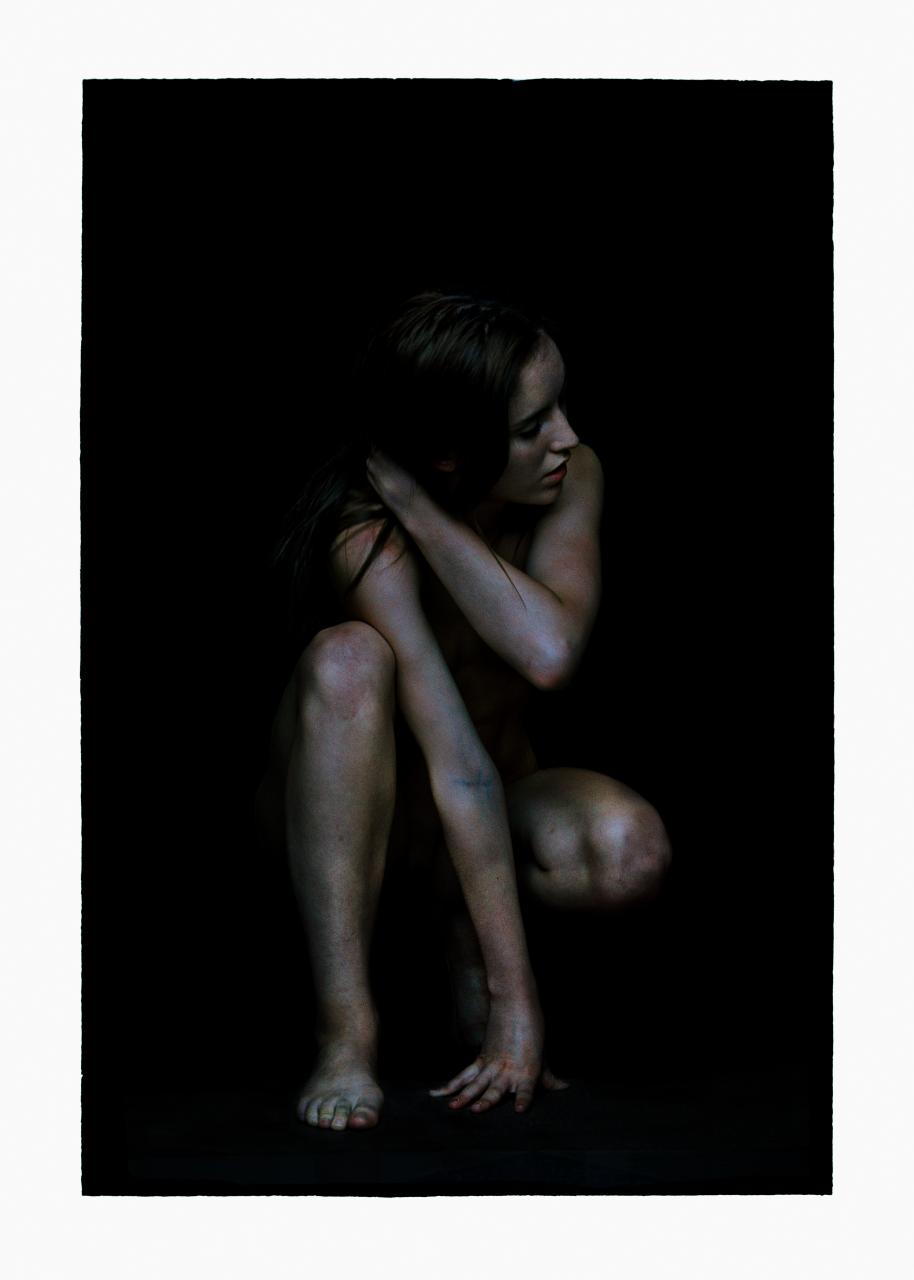
Twenty three pieces dating 2008 to 2011, all hung in a single dark room, white borders glowing palely all around - a mix of naked adolescents, dramatically twilit landscape, and sculpture and other art amidst viewers, emerging against darkness with pale and sometimes golden glow.

I've sometimes wondered whether the attraction to Henson is primarily aesthetic - residing in his emotional sensibility and the way it mingles the beautiful and the sublime in a nocturnal palate. This exhibition hasn't particularly helped me in resolving that question, except by producing the thought that, maybe, so deep is the effect that he has that there must be something more profound to it, something more essential - in the sense of being of the essence - however it's produced.

Hinds - Leave Me Alone

Brightly clattery, garageily jangly guitar pop.

Transformer

Impromptu dinner at Transformer on Thursday night, and they were playing the best songs from first Mezzanine, then Moon Safari, then Dummy - three albums that were always far better than the 'chillout' genre that sprung from the beginnings laid by them and others, and indeed three albums that have proven to be real classics, now some two decades on.

Jennifer Down - Our Magic Hour

"Tender are the stairs to heaven". That's the name of the piece they see in the NGV:
At the end she came to a great dark room. There was a ladder suspended from the ceiling, made of fibre-optic cables that changed colour. As she got closer, it seemed to stretch impossibly into the sky, and down into the ground. It was dizzying.

Adam was lying on the floor on his stomach like a child. Audrey lay down next to him. The dark, his warm body, the lit ladder reaching into the ceiling, its illusion of bright endlessness. Audrey thought she might cry.

'It's a mirror,' Adam whispered. 'See? There's one at either end.'

Audrey stared at the ladder, watched the colours change until the room around it melted away.

At last Adam stood, and she did too, obediently. It was like swimming up from underwater.
It's a Yayoi Kusama and one that I know well from when it was last on display, there on the third floor in that stand alone room on the other side of the decorative arts.

And it's that kind of local detail - contemporary inner city Melbourne, littered with highly specific references to place as well as a certain associated mode of living for the young - which makes it very difficult, and probably impossible, for me to tell how 'good' Our Magic Hour is; the passing (or not so passing) references to Nicholson, Brunswick, Smith and Gertrude Streets, the view from Ruckers Hill in Northcote, familiar pubs, sharehouse dynamics, the type of music that's always in the air ("an earnest, jangly garage rock that made her sentimental").

But however much I was filling in myself, and however influenced by my own desire to read books set in the Melbourne that I know today, I think that Our Magic Hour is a novel of genuine quality. The writing is simple but unafraid of the descriptive, experiential moment or image; the interactions between the characters feel real, even the ones who are only sketches, passing presences on a few pages here and there; the depiction of Audrey's slump into depression is convincing, including in how it renders the flatness of affect and hollowness that comes with it, layered with the struggle to function day to day.

Miss Sloane

The premise is inherently enjoyable: watching a whip smart manipulator take on enormously powerful vested interests in what, for better of for worse, must now be known as the DC swamp of political lobbyists, and Chastain brings a suitably hard edge and opaque outwardness to the portrayal as her Elizabeth Sloane manoeuvers towards her endgame. Also good: seeing Mark Strong play a regular, decent human being (a first I think); plus Alison Pill.

Terry Pratchett & Neil Gaiman - Good Omens

It's been a long time! A one-off, published in 1990, so same year as Moving Pictures and pre any of Gaiman's solo novels. Hasn't aged too badly but then it comes so wrapped up in the associations of both authors' oeuvres that it's basically impossible to tell.

"Philippe Parreno: Thenabouts" (ACMI)

A return visit. This time, it was:
  • La Nuit des Heros (which I didn't feel bad about finding largely incomprehensible once I looked it up, after the fact, to discover that it was a comedy about an art historian who "has removed himself from society to write the history of modern art, and amuses himself by making important figures from modernism, from Cézanne to Yves Klein, speak with the voices of French celebrities such as Jean-Paul Belmondo or Françoise Sagan"; in the meantime, his neighbour, who he thinks is an angel, films people asking them whether they believe in images)
  • Boy From Mars (of which I'd seen the first, two and half minute establishing shot of the lit-from-within purpose building last time, but not - I don't think - the water buffalo generating the electricity for the illumination or the other images of flaring light and darkness)
  • C.H.Z. (continuously habitable zones - black vegetation in imagined landscapes)
  • Crowd (only the first bit, and then I had to rush off - so I didn't get to see the effects of the full hypnotism)

Saturday, March 11, 2017

Kong: Skull Island

Friday night fare. Elevated to enjoyableness by some of the cast (more because of who they are than because of any particular charisma in these roles - Tom Hiddleston, Brie Larson, SLJ) and the impressive creature effects, especially on Kong himself.

(w/ Julian)

The Earthmen - College Heart

A best-of compiling 18 songs released by this Melbourne band across the 90s; I came to it because of their transcendent version of "I Just Don't Know What To Do With Myself" on To Hal and Bacharach (though that one's not actually on College Heart) and it's a pretty good set of alternative-ish rock-pop including a nice line in short, low-key balladry, the strings on "Tell The Women We're Going" the first sign of that propensity on the compilation.

Sunday, March 05, 2017

Andrey Kurkov - The Milkman in the Night

Surreal happenings in and around Kiev, Ukraine, from the just about plausible if rather odd (Irina's breast milk and its use) to the really extremely unlikely (Semyon's somnambulistic joining of a new democratic movement that meets only at night and aims to take over Parliament) through to the out and out fantastic (the chemical formula causing all who ingest it to be imbued with an extremely sharp sense of justice on which they act, include the grey cat Scruffy who becomes a kind of feline vigilante of the night, which is even capable of at least temporarily reanimating the recently dead), with a cast of characters whose motivations are unclear to say the least, although all of the main ones end up turning out to act honourably and get happy endings when it comes to it. A pretty interesting novel and difficult enough to predict (impossible actually) that I finished it quickly. I picked it up in a bookstore a while back because the blurb made it sound a bit like The Master and Margarita, but actually it comes across a bit more like some kind of post-Soviet and multi-perspectived Murakami styled piece (down to the regular recitations of what is eaten and drunk - in this case frequent bowls of dumplings called 'pelmeni', loaves of brown bread and various salted and pickled vegetables and food-stuffs, often as accompaniment to vodka).

John (Annie Baker; MTC)

Quite exceptional - best thing I've seen in a while.

A youngish Brooklyn couple - Elias and Jenny - check into a somehow forebodingly kitschy bed and breakfast in Gettysburg, where they're greeted by an owner, Mertis, whose chipper demeanour can't help but (at least in the context) cause the audience to wonder what secrets she or the house are harbouring and later meet Mertis's friend Genevieve who, blind and oracular, seems almost to have stepped out of a Beckett play; Genevieve's pronouncements during the play's second act (there are two intervals over its more than three hour running time) seem like embodied statements made by the world itself, and still more so when she breaks the fourth wall when house lights come up for the second interval and directly addresses the audience about the time, years previously, when she went mad.

One of the play's most impressive features is the way that it's so clearly 'about' a number of things - most notably, hauntings and ghosts of many kinds - and yet never obvious or at all over-determined. This plays out particularly keenly in the many parallels that are set up between Jenny and Genevieve, leading us to speculate that - on some however level - the latter is an older version of the former (the similarities of their names, the way that both describe experiences of feeling transcendently at the centre of the world, their common tendencies to ascribe spiritual relevance or even agency to objects, the way that it seems just possible that Genevieve could have been the one who gave the doll Samantha - from Jenny's childhood - to Mertis so that it could end up hauntingly surveying the scene from its shelf in the b&b/stage set, the common (ha, ha) name of 'John' across their stories) without resolving or really more than suggestively hinting at the possibility or what it might mean. (Also - is that Lovecraft that Mertis reads to Genevieve as her 'weekly reading'?!)

It's very good on each of the levels at which it operates, not least in the relationships between the various characters and between each of them and their pasts and off-stage others. And its subtlety neither obscures nor falsely betokens a depth that will, I think, make it linger.

(w/ Laura F and Meribah)

Tuesday, February 28, 2017

The Sandman: Overture (Neil Gaiman et al)

The art in this one is really quite strikingly beautiful. An 'overture' in that it retrospectively precedes the main series, telling the story of the events that led to Morpheus' weakening to the extent that he came to be imprisoned at start of that main run, and also in its successful encapsulation of many of the series' major themes.


Monday, February 27, 2017

Atonement

For no particular reason, I felt like rewatching this, and I'd forgotten how visually beautiful a film it is - every shot and every scene is artfully composed and shot with much in the way of lovely images. Also notable is the top notch cast - apart from the principals (Knightley, McAvoy, Ronan, Garai, Redgrave) there's also Benedict Cumberbatch (convincingly predatory), Juno Temple (playing too-young and alluring, so, as per usual) and Alfie Allen (aka future Theon Greyjoy).

(last time)

Sunday, February 26, 2017

Art etc

Various things from a couple of hours in the cbd this afternoon.

Rio Ponce (No Vacancy)

Video works all concerned one way or another with (the artist's) body.


Ward Roberts

Via a book in Metropolis. Pastel-y dreamy photos of sport courts in Hong Kong.


NGV Aust

Dan Moynihan - "Sunset Strip" (2016):


Clare Rae via three performatively posed photos that struck me as deadpan wry (and which I liked a lot) - this one is "Untitled (Gallery stool)":


Jeffrey Smart - "Rooftops" (1968-69), Italy. Feel like I've perhaps seen it before, but it made an impression this time:


Peter Purves Smith - "Surrealist landscape" (1938):


Miscellaneous other perspectives:


String Theory: David Foster Wallace on Tennis

Five very enjoyable essays that are genuinely about tennis, as well as several others things all at once.

I recently re-read the Federer one ("Federer Both Flesh and Not") and I've also read the one about DFW's own years as a highly ranked teenage player in the mid-west before ("Derivative Sport in Tornado Alley") but possibly the most engaging is the one from which the collection takes its title, here renamed "Tennis Player Michael Joyce's Professional Artistry as a Paradigm of Certain Stuff about Choice, Freedom, Limitation, Joy, Grotesquerie, and Human Completeness" - Joyce having been an American player who made it into the top 100 in the mid 90s with whom Wallace spent considerable time and who emerges paradigmatically through an essay that's both generous and clear sighted (and funny). Also, Sampras vs Philippoussis at the US Open, Athens and Sparta, democracy and commerce, clever and illuminating.

Side note: it's amusing how much he hates Agassi, and finds every opportunity to express it; eg, in a footnote, "Sampras is surprisingly childlike and cute on the court, in person, in contrast to Agassi, who's about as cute as a Port Authority whore".

"Lit from underneath" (2016 cd)

1. Hands of Time – Margo Price
from Midwest Farmer’s Daughter (Third Man; 2016) 

2. Torch Song – Laura Stevenson
from Cocksure (Don Giovanni; 2015)

3. Real – Lydia Loveless
from Real (Bloodshot; 2016)

4. Atomic Number – case/lang/veirs
from case/lang/veirs (Anti; 2016)

5. Kismet Kill – Haley Bonar
from Impossible Dream (Memphis Industries; 2016)

6. No Spare Key – Honeyblood
from Honeyblood (Fat Cat; 2014)

7. Your Best American Girl – Mitski
from Puberty 2 (Dead Oceans; 2016)

8. Sister – Angel Olsen
from My Woman (Jagjaguwar; 2016)

9. I Can Change – Haley Bonar
from Impossible Dream (Memphis Industries; 2016)

10. Tom Sawyer / You Know Where You Can Find Me – Laura Stevenson
from Cocksure (Don Giovanni; 2015)

Through-lines this year: female artists (exclusively, based on this round-up!), countryish bents and callbacks to the 90s. Not new, but striking in its consistency. 

Unusually, there weren’t any individual songs or albums that I became really obsessed with in 2016. But I did find myself coming back to Laura Stevenson’s sugar-sharp Cocksure throughout the year, all evocatively cryptic lyrics and spiky melodies and none better than “Torch Song”, plus the epic (even in its name) “Tom Sawyer / You Know Where You Can Find Me”, the kind of soft-loud with-arms-outstretched anthem that’s so often attempted and so rarely pulled off. 

Meanwhile, two recent favourites of mine put out new records that cleaned up their respective sounds but retained the raw edge and musicality that distinguished them in the first place – Angel Olsen (“Sister”, a wendingly heartfelt electric folk journey), and Lydia Loveless (“Real”, a more concise statement of chiming country-rock yearning). And there was the unexpected gift of a collaboration between Neko Case, Laura Veirs and k d lang, three of the most characterful and best voices in americana etc, and as graceful and interesting together as you’d expect. 

In terms of new discoveries, Margo Price crept up on me with her simple storytelling and arrangements in songs so well-crafted as to transcend their genre trappings, Honeyblood provided a jolt of the closest thing to 4ad-style alternative rock that I’ve heard for a while, right in the sweet spot, and there was the instant classic that was Mitski’s stormy, crystalline “Your Best American Girl”.

But it was Haley Bonar’s shimmering Impossible Dream that was my favourite album of the year. “I Can Change” is the stand-out but “Kismet Kill” isn’t far behind, both in their different ways lit from within by Bonar’s wisp of a voice and gift for gauzey hooks and pop song dynamics (including little post-punk touches), and the whole thing is sheer delight. I didn’t see her coming – but here we are.

- December 2016

The Homosexuals, or 'Faggots' (Malthouse)

Explicitly - or, at least, metatextually explicitly - a farce while at the same time sharply satirical, the elements of the two forms constantly both in play so that the physical and verbal comedy are never separable from the implicit commentary (which is scathing in basically every direction that it looks - if there's a message or moral, it's probably something like the play's final line: whether because of privilege in any of its many forms or through exaggerated identity politics, don't be awful), not least because so much of it is so ridiculously 'non politically correct'. This one didn't strike me as much as the others of Declan Greene's that I've seen in the past but still, it was great, barbed fun.

(w/ Meribah and Tamara - from the front row no less)

Saturday, February 25, 2017

The Best Australian Stories 2016 edited by Charlotte Wood

It's hard to know to what extent this reflects the general Australian literary short story story landscape right now and to what extent editorial preference, but the stories collected here definitely tend towards the serious - while not generally tilting into the outright sombre, a moodiness hangs over the collection and there's a distinct lack of humour or, for the most part, levity of any kind. Wood's own take: "If anything unifies the stories in this collection, it might be my own preoccupation, which emerged as I read, with what I came to think of as the trio of ghosts, monsters and visitations."

I tended to be drawn to the stories that most actively seek to imagine different realities (often with a dash of the poetic) and - separate category - those that offer, and deliver, something a bit plot or mystery-driven. Plenty of very established writers are represented, but my favourite is probably "Coca-Cola Birds Sing Sweetest in the Morning" by Elizabeth Tan (who seems to be just getting started), sweet, gentle and sharp and hitting a register that manages to be both familiar and a touch strange; also James Bradley's "Martian Triptych" and, in a different vein, Trevor Shearston's "A Step, a Stumble", which is one of those seemingly unremarkable observationalisty realist type stories that slips under the skin.

[Update 1/3/18: You never quite know which are the stories that will linger. A year on and I find that Fiona McFarlane's colossal (different from giant) squid story "Good News for Modern Man" often surfaces in my mind.]

The Girl With All The Gifts

A pretty faithful translation from book to film. Also - it's not very clear to me why zombies seem to come up so (relatively) frequently in my pop culture consumption. Perhaps they're just having a wider cultural moment.

Monday, February 20, 2017

CCP

We were in the neighbourhood with no firm plans.

Most interesting were the pieces from James Tunks' Elsewhere series. As described by the website:

* * *

Instead of photographing stars themselves, Tunks constructs the photographs using predominately found and accumulated material that is crushed and pulverized to mirror interstellar nebula. This process forms constellations between otherwise arbitrary materials whilst at the same time echoing the history of astrophotography and its pioneers such as Edwin Hubble and EE Barnard. 


Image: James Tunks, Crushed and pulverized 35mm Minolta wide angle lens, still photograph from Stanley Kubrick’s 2001: A Space Odyssey, aspirin migräne, coconut, viewfinder prism, paperback cover of Jorge Luis Borges ‘Labyrinths’, found hunting arrow, Icelandic flag sew on embroidered patch, ground espresso, page from Francois Laurelle’s ‘The Concept of Non Photography’, pistachio husks, photograph of lion paintings from Chauvets Cave, dried hibiscus, type-c print, 85cm x 130cm, courtesy the artist.

* * *

The constituent material can't but intrigue and play out the drama of meaning-making (we seek out meaning; it emerges whether or not actually 'meant'; which is in the nature of meaning itself - maybe).

Some of the pieces in the 'Elegy to Apertures' exhibition also had a bit of an appeal, but more surface-aesthetically than in any deep way for me, despite the concept of the exhibition being about the interstitial or portal-like nature of the camera aperture and the way that it limns the taken image - both enabling and limiting and circumscribing it.

(w/ Trang)

Sunday, February 19, 2017

White Night Melbourne, Saturday 18 February

"Night, the beloved. Night, when words fade and things come alive. When the destructive analysis of day is done, and all that is truly important becomes whole and sound again." - A de S-E

It's rather startling to realise that this is the fifth White Night in Melbourne - not just because that means it's now been five years since the first but also because I would've expected to have more distinct memories of each than I actually do. I'm pretty sure this was the first actually cold one, and unfortunately that's the only way in which it was particularly novel - it was nice to look at the lit-up buildings and installations but there wasn't any shock of encountering the new, any charge of excitement.


(2013, 2014, 2015, 2016)

Edge of Tomorrow

I was thinking yesterday, prompted by rewatching (and again liking) Edge of Tomorrow, that it's striking how strong seems to be the intuition that all is not as it seem with human existence, the possibility appearing over and over in popular culture and philosophical thought.

(last time)

Wednesday, February 15, 2017

Tift Merritt - Stitch of the World

Across an extended series of good to verging on great records (Tambourine in particular still gets plenty of plays),[*] I don't know that Merritt has ever been so consistently sweetly, gently yearning as she is here. There's a bit of straight-up country, a pronounced folk hue, and slices of the americana-styled soul at which she's so adept (most notably the melancholy/triumphant "Heartache is an Uphill Climb"); at the risk of descending into cliche, it's a record that feels like a river, so smoothly does it flow.

A few stand out over the first several listens - "Heartache", the folkily chiming and Raymond Carver poem-repurposing "My Boat" (reminding me inevitably of A New Path to the Waterfall), the clean melodies and clear vocals of "Love Soldiers On", "Stitch of the World" and "Something Came Over Me" - but over time every song comes into focus, as the record as a whole reveals itself. It's a grower; it has a glow.

[*] Bramble Rose, Tambourine, Another Country, See You On The Moon, Traveling Alone

File with: Laura Cantrell, Lisa Miller

Monday, February 13, 2017

Laputa: Castle in the Sky

A sweet adventure story, filled with a sense of wonder both visual and experiential. An aside: I wonder to what extent there's something inherently wistful about anime - at least in the terrain inhabited by Miyazaki - as opposed to that being a set of more personal associations that I've built up over the years.

Graeme Macrae Burnet - His Bloody Project

Interesting on multiple levels - criminological, psychological, historical, metafictional - and page-turningly intriguing in its playing out of questions of what really happened (who committed the act is never in doubt, but why - and what it even means to ask 'why?' - are where the real mystery lie). In its layering of perspectives and truths, it reminded me of the effect had by The French Lieutenant's Woman, and it's slyly effective in eliciting sympathy for the 17 year old Roddy via the presentation of his account of the events leading up to the killing of Lachlan Broad and two others whose identities we don't discover till later, despite some odd lacunae and specifically in terms of sexual knowledge and desire, before throwing doubt that's both factual and epistemological on Roddy's version through the texts that follow.

Game of Thrones season 6

Another go-through. The big question now is really, in the run home, there are any big surprises remaining  - or is it just variations on moving the pieces around and removing the remaining obstacles till Jon, Dany and cohorts team up to defeat the White Walkers now that winter has come?

(previously)

Sunday, February 05, 2017

The Encounter (Malthouse - Complicite; dir Simon McBurney)

Managed the rare feat of offering a theatrical experience of a kind that I hadn't had before, while making the novelty - the use of immersive headphones throughout - an integral element rather than a gimmick. 

Some of us are friends ... the face of time ...

Imagining the 1969 encounter between American photojournalist Loren McIntyre and the 'lost tribe' of Mayoruna people in the Amazon and McIntyre's experience of non-linguistic (telepathic) communication with their head man as part of a journey of return to a mysterious beginning which functions - on some level at least - as return to an earlier time, it weaves a 'surround-soundscape' in which the aural layers and lines (present and past, live and pre-recorded, organic and technologically-mediated, real and fictional or imagined, linearly narratival and circular) play out the concerns of the play as a whole, both as staging of McIntyre's story and as a wider playing out of questions about reality, consciousness and time. Mounted as a one man show (an impressive Richard Katz - McBurney's alternate in its NYC run), it was really very good.

(w/ Tamara and Meribah)

* * *

Also, google reveals that McBurney also directed the version of "All My Sons" that I saw on Broadway several years ago, and had this to say in an interview at the time (aptly):

The only reality of the theater exists in the mind of the audience. That audience looks collectively at what is going on on the stage and collectively imagines that this is real. ... But what is more fundamental is the notion that when everybody laughs together or, last night, when I heard people around me collectively sobbing, at that moment we are bound together not by our bodies sitting in the theater but by a collective imagination. At that moment we understand the lie that what we think is only our own, that our internal lives are only our own. At that point our collective imaginations become one imagination and my internal life becomes the same as your internal life, which is what Aristotle understood when he analyzed tragedy. It’s a collective act in which we collectively understand something about being a community together. The moment we understand that, feel it, we feel a kind of responsibility in which we must collectively help and take responsibility for each other. That is part of the definition of our humanity and, if you like, if it’s not a contradiction in terms, our animal humanity. Of course, that is part of what “All My Sons” is about. 

[NYT]

Sunday, January 29, 2017

Thursday, January 26, 2017

Jackie

More interesting and better than I'd expected - nuanced and unjudgemental in how it treats both the myth-making element of her rendition of Kennedy's presidency and the events around his assassination, and the way she responds to that personal and publicly-lived loss (grief, depression, self-assertion), with the second of those - the experiential side - much the better. A heavy film, and given additional weight by Portman's performance, which is convincingly layered (not to mention the score).

(w/ Sara)

Veronica Mars

It really only works with the context of having watched the show, I suspect, and even then it doesn't have the sharpness (of all kinds) that the tv series had at its best - but it's not terrible either, and it's a chance to revisit all of the surviving major characters that I can think of, so for that I enjoyed this famously kickstartered film continuation. Veronica Mars, what a great character.

(seasons 1, 2, 3)

Sunday, January 22, 2017

Born Yesterday (MTC)

Fun start to the season - 1940s/50s wheelings and dealings, romance, screwball comedy and some darker edges including Trumpian resonance. Russell Dykstra (known to me as 'the solicitor from Rake') good as the bullying junk yard millionaire who comes to Washington looking to remove pesky legal obstacles to his none too scrupulous business dealings and so too Christie Whelan Brown as his 'dumb' blonde companion whose coming into her own drives much of the action of the play.

(w/ Tamara)

Saturday, January 21, 2017

"Sovereignty" (ACCA)

With a few exceptions, contemporary art produced by indigenous Australians, resulting in some common themes but explored in a range of ways.


(w/ Kim)

The Dark Knight Trilogy

What an epic - a character that it gets as much from its characters and how its action is shot as from its narrative and thematic arcs. Impressive the way the three films complement and build on each other while each having a distinct feel and take on genre.

(Batman Begins; The Dark Knight; again; The Dark Knight Rises; againBatman Begins)

Sunday, January 15, 2017

NGV International

Some bits and pieces from two exhibitions on level 3: "Common ground", made up of selections from the permanent collection (art, design, fashion etc) organised around the themes of 'urbanism', 'nature', 'time', 'masculinity' and 'anthropomorphism; and "Shut up and paint", which ranged across a wide range of types of contemporary painting including quite a few newishly acquired pieces.

Michael Parekowhai - "Rainbow Servant Dreaming" (2005). Nice Magritte reference - five painted figures mounted on a wall:


Sarah Ryan - "What to give and take" (2011). A lenticular photograph - digitally spliced images that then appear to move depending on the viewer's perspective:


A couple of Scott Redford 'urinals' (2000), glistening jewel-like, including one from Surfers Paradise:


Matti Braun - "Untitled" (2015). Coloured dyes on silk, the shades of pink differentiating and deepening with time and immersion. And, in conversation with the Braun and similarly large scale: Helen Frankenthaler - "Cape, (Provincetown)" (1964); I've seen this one before but was struck by it anew today.


And, in a different vein, a pleasingly phenomenological piece - a much more modestly sized and presented watercolour and wash: Gunter Christmann - "The streets of Darlo (Woman sitting on steps)" (1994):

Friday, January 13, 2017

The Edge of Seventeen

Rather just right in its depiction of teenage not-being-understood and not-understanding. Falling into neither caricature nor cartoonishness, it feels real without ever being forced, and optimistic without being naive - the 'coming of age' is clearly patterned yet believable. Very nicely done.

(w/ Julian)

"Philippe Parreno: Thenabouts" (ACMI)

Some striking images amidst this exhibition of video pieces made by Parreno - we came in partway through Marilyn (set in a set of a Waldorf Astoria hotel room), then 1968, a recreation of the train journey that took Robert Kennedy's body from New York to Washington (its still-posed passers-by made me think of Gregory Crewdson), Invisibleboy (the most engaging of the ones we saw, with its gradually emergent monsters), its sequel, the moody Li Yan (night-time, a woman) and then the beginnings of another. The order of the videos is up to the 'gallery technician', as a gesture towards making the exhibition more participatory and recognising that it has meaning only through being viewed by the audience; possibly, that also explains the mildly helium-ed fish-shaped balloons there for the playing with in the darkened space.


(w/ Meribah)

Hero

I wasn't as susceptible to this one as I was whenever it was all those years ago that I saw it previously, though if anything I suspect I would have enjoyed the cinematography and colours more on this pass. I'm a big rewatcher (and rereader) but I guess not all films stand up to that in the same way.

Wednesday, January 11, 2017

Rogue One: A Star Wars Story

It probably only works as 'A Star Wars Story', since it's that context that gives the film's events their significance. So it's hard to assess this film 'on its own terms' as it were. Still and all, I thought Rogue One was pretty good - it moves slickly but has a decent dose of military grit to it, not least in the fates of every single one of the main (good) protagonists. Directed by Gareth Edwards and while it doesn't have the same distinctive touch that characterised his work in Monsters and Godzilla, there's nonetheless a deftness that also plays its part in elevating Rogue One despite its franchise-y trappings.

Star Trek Beyond

Fast-moving fun - it really is one thing after another, and entertainingly so.

(Star Trek, Star Trek Into Darkness)

Sunday, January 08, 2017

Adia Victoria - Beyond the Bloodhounds

At its best when at its growliest, with fuzzily blues-rock trawls like "Sea of Sand" and "Stuck in the South", but the more hauntedly folksy cuts work too, with Victoria's raspy voice adding still more grit to a set that wouldn't be lacking even without it. Neat.

"David Hockney: Current" & "Viktor & Rolf: Fashion Artists" (NGV International)

David Hockney

Much funner, more technically proficient and better than I'd expected - very enjoyable in fact. Several sets of works from the last five or so years; the iphone and ipad works are impressive (it's quite something the way they work so well at such large scale, like the Yosemite ones), as is the "82 portraits & 1 still life" series (lots of people connected to Hockney's life, including art world luminaries and others like Larry Gagosian, Benedikt Taschen, Jacob Rothschild, members of his family, various artists and collaborators, Tacita Dean's son, at least one and it might have been two of his dentists...), and the playing with cut and paste photos and paintings and photos of paintings (including the paintings and some of the objects they depict - like the blue benches - being installed as part of the exhibition).


In between

An interlude in the sun, beanbag, garden outside, my mind as close to empty as it's been for a long time.

Viktor & Rolf

Also a lot of fun - clothing on mannequins, miniature clothing on dolls, catwalk show videos, and one doll on a catwalk. Called Zoolander to mind once or twice, reminding me of the inherent silliness of haute couture (which I don't mean entirely damningly).


Saturday, January 07, 2017

Passengers

Well I watched this mainly because cinemas have air conditioning and it was on at the right time, and space-y visuals, Chris Pratt and Jennifer Lawrence are all appealing. All three of those were fine (the bit with the swimming pool when the gravity controller goes on the fizz is memorable), and Michael Sheen's android barman was a nice turn, but the story is rather too bland - despite a good premise - to leave much of an impression.

Laura Stevenson - Live at the Vera Club

Mostly drawn from the (both excellent) Wheel and Cocksure, and not that different from the recorded versions. Available for download by 'donate what you want'.

"Sister Corita's Summer of Love" (Potter Museum)

Pretty cool: silk screen prints made by Sister Corita Kent, a Catholic nun, in the 60s - some with an explicit faith-related element but most just humanistically exhortatory and progressive. I liked these.


Sicario

Terrifically written and shot - economically and tightly on the first count and quite spectacularly on the second - and just generally a very well put together and involving film. It doesn't ever seem like Kate's involvement with the murkily not-by-the-books 'cross agency team' that is conducting an escalating - and exciting - series of operations targeting a Mexican drug cartel is going to end well, and it doesn't, but that's as it should be. Also, for the first time I really realise what the fuss is about Emily Blunt, who is thoroughly convincing (also Benicio del Toro, inscrutably and dangerously charismatic).

Thursday, January 05, 2017

Game of Thrones seasons 1 to 6

Rewatched seasons 1 to 5 anyway in the lead up to season 6.

Season 1 (22 July). A reminder of how neatly everything is set up, with a lot of what's to come foreshadowed not just in this first season but in fact in the very first episodes. And, in fact, what a tightly put together season of storytelling it is.

Season 2 (21 August). Rewatching this goes in layers: previous book reads, previous tv season watching, and the experiences of all of the above, all in the background to the immediate re-encounter. Season 2 occasionally feels spread just a touch too thin even though it has the convergence of several major characters on King's Landing as its spine, but it's noticeable how it lays out both history and depth of its characters as it goes, while also showing the choices that they make which will later prove fatal whether literally or otherwise (Theon, Robb).

Season 3 (10 December). On first pass, I think when I watched this season I might not have been fully focused on it; on this go around I also felt that the episodes themselves were perhaps just a bit too scattered, but that's probably inherent in the show's design and particularly the number of characters and how widely flung they are (Derrick asked me who my favourite was; answer: Arya). The Tyrells become more prominent, we meet the wildlings, bad things are done by erstwhile Stark allies (and by plenty of others), Theon's torture really gets to be a bit much (although it does allow for a few minutes of uprush at the end when Yara comes across all heroic), all the killing at the end of the 'red wedding' still hits home, I realised that Davos's decision to save Gendry is maybe responsible for Stannis's later and even worse choice (and we see a bit of poor doomed Shireen), and a whole lot of other characters who'll endure through to at least season 5 (which is as far as I've seen as yet) go through an awful lot: Cersei, Jaime, Tyrion, Sansa, Jon, Sam, Brienne, with Petyr Baelish and Dany for the time being seemingly ascendant and Bran an apparent wildcard. Power and family are equally important themes, along with the morally arbitrary way in which anything can happen to anyone.

Season 4 (17 December). In a show full of brutal shocks, Oberyn's death is right up there - not only because he's such an enjoyable character, but because it happens right when it seems he's on the verge of actually exacting justice (which would be pretty much unique in the show so far). Also worthy of note: the way that the slipping of the Lannisters' grip on power is precipitated by the four main family members themselves - even Tywin - and their relationships with each other (once Joffrey has been removed from the frame); the way that Cersei continues to be given moments that make her, if not quite sympathetic, at least at times an understandable figure deserving of sympathy; Sansa's seemingly beginning to come into her own; episode 9 as the wildlings storm the Wall and Jon takes unofficial command; Dany beginning to bog down; multiple encounters between previously separated characters on their various travels; the relationship between Arya and the Hound (and the optimistic final scene of the season, as Arya sails away to Braavos).

Season 5 (30 December). A few things here. It's so baked in that you don't even notice how thoroughly the character archetypes (as opposed to the narrative expectations) are being undermined until you pay attention: beautiful queens, heroic knights, noble lords, evil dwarves. The dragons get very big during this season and you remember that maybe they're at the heart of this whole thing. Myrcella looks like an actual fairytale princess until she succumbs as part of the carnage of the final episode. The Sand Snakes are unconvincing - a low point in the characterisations of the show. Cersei gets her moment and is not as subtle as she thinks; the Tyrells are brought low; Stannis loses it all (so what of Melisandre?); the Boltons are proving maybe the purest manifestation of the cruelty of the will to power. A remarkable number of Stark children are still alive. Tyrion (and Peter Dinklage) is really magnificent - great in his own right and no matter who he is playing against (Varys, Jorah, Dany).

(previously - seasons 1 (and again), 2, 3, 4 and 5)

* * *

Season 6 (5 January). Starts fast and strong, immediately going to the aftermath of all the major developments and cliffhangers from the ending of the previous season and producing an effectively creepy reveal at the end of opening episode "The Red Woman". And the rest of the season mixes episodes and passages moving at a similar pace as the key characters increasingly converge or are put on a path to convergence and a whole lot of loose ends are tied up including seemingly every major character or group who's previously been introduced returning as the pieces begin to move into place for the beginning of the endgame, with episodes and sections that are more about scene-setting and exposition (but with a similar aim of gathering things together for the impending series climax).

Along the way, it can almost feel - at once satisfyingly and (given the tenor of the show to date) concerningly - like heroes and villains are emerging, with the latter getting their just deserts.

The last two episodes are absolutely packed: first you get the feel-good in Meereen, with Dany (definitely in the hero camp for now, as she has been all series) beating the slavers and then teaming up with Yara (less prominent but also clearly 'good' for now in the sense that you see her care for other people and want to do the right thing) and therefore teamed up with Tyrion (another 'good' character pretty much from the get go somehow despite killing both his lover and his father in quick succession a couple of seasons back), Varys (good by default because principled and trying to serve the realm) and Theon (presumably now redeemed despite the villainous doings in sacking Winterfell, killing innocent children, etc), then there's the ugliness of the Battle of the Bastards (preceded by the dispatching of Rickon) which still is the end of Ramsay, followed by the feel-bad in Kings Landing with the unexpected - but, in retrospect, maybe entirely consistently escalatory and direct - turn of Cersei blowing up the Sept and with it Margaery (I'll miss her) not to mention Loras, Mace, Lancel and the High Sparrow (with Pycelle also removed) and then Tommen's departure leaving her on the throne.

So you've got Cersei in Kings Landing surrounded by her supporters, with the unknown that is Jaime and his relationship with her. And you've got Jon, acclaimed as the new King in the North, and Sansa (reunited in another feel-good moment that does feel earned given how long all the Starks have been separated ... although the unknown of the relationship between them) in Winterfell, together with Davos and the ever unknown quantity that is Littlefinger. And, finally, Dany is on her way, with the supporters she's garnered (see above) plus seemingly the Martells and what remains of the Tyrells.

There are still plenty of others at large, but increasingly they seem on a trajectory to collision or resolution. Bran and his history-filling flashbacks (which actually work well) is now full of knowledge plus there was the sudden action with the Night King - not to mention the pathos of Hodor - and it seems like he's headed for the fray. The Brotherhood without Banners is seemingly heading north, Sandor Clegane probably with them. The Red Woman might be heading their way. And Arya does away with Walder Frey and is also heading back towards the main action. Elsewhere, the Knights of the Vale have finally been activated, and the Tullys at Riverrun (with Edmure) may be back in the game. Plus Brienne and Jorah, and it's unclear what's become of Euron ... and Gendry?

Despite the absurdity of the number of characters there, it feels comfortingly like everything is being moved into configuration giving the show every chance to stick the landing.

Monday, January 02, 2017

Daniel Flynn - Chapter One

There was a (relatively brief) period when I was buying bottled water semi-regularly while in the city and, once I'd noticed them in 7-Eleven, I got in the habit of buying the 'Thankyou' ones because of the claim on their labels that profits went towards international development projects to improve lives (with individual tracking code number on each bottle to prove it); it also didn't hurt that they were Australian. A little while later, I noticed they'd expanded to muesli bars and cereal - and was impressed that they were being stocked by Woolworths - and added those to my shopping rotation too.

I've learned from reading Chapter One, by Thankyou (co-)founder Daniel Flynn, that the organisation is a genuine for-purpose social enterprise, set up as a charitable trust and with all of its profits going towards projects aimed at combating poverty. Also interesting to follow his account from idea to start-up to - at least at present - success, and what it took to get there (including some innovative approaches to campaigns targeting 7-Eleven, Coles and Woolworths through social media and other means), as well as their plans for scaling up their operations and impact including deliberate diversification of products before markets. It made me want to know more, as well as doing enough to make me believe that there might be something significant here in what they're doing and how they're doing it.

I received this as a gift (from Ray) but I also liked the angle on the book itself whereby purchasers choose how much to pay for it, and therefore the size of their contribution to Thankyou's purpose.

From the FAQ on their website: 

How does Thankyou™ finance its operations? 

Although we operate as a sustainable business, we’re different to most other companies in that we don’t have investors or shareholders. This is great for impact because it allows us to give 100% of profits to projects, but it also can be a challenge when it comes to growing the organisation. Because of this, a big part of what we do relies on our strategic partners, many of whom offer a range of services to us at a discounted rate. In addition, we have private donors who don’t invest but simply give towards growing the Thankyou business.

Saturday, December 31, 2016

Honeyblood - Babes Never Die

Fizzier and more imbued with energetic girl group touches than their previous album, but less distinctive than that other one and sounding more like a bunch of others going around presently (notably Metric, to whom I seem to compare other bands an awful lot). Still quite good though.

The Beatles - Let It Be

It's been a slow, slow burn with me and the Beatles. Of course their music has always been there - it's always been everywhere - and over time I've noticed my feelings about their music shifting from vague liking-well-enough of what was basically music history tapestry to more active enjoyment, but for the most part I never really focused on them that much, nor got any further into their record discography than Sgt Pepper's and Rubber Soul (not even the red and blue albums). Anyhow - now I've listened to Let It Be as well, and as the years go on I like them more and more.

Monday, December 26, 2016

Hell or High Water

Contemporary West Texas western that's suprisingly low key - and boasts a surprising streak of humour - while actually having quite a lot of action and building a set of characters and relationships with enough zip to interest us in their fates (not to mention a health dose of social context). Jeff Bridges is in top form as the Texas ranger on the trail of the bank-robbing brothers. Good.

(w/ Julian)

Sunday, December 25, 2016

La La Land

Just as charming as everyone says it is, Gosling, Stone, musical numbers and movie-set nostalgic backdrops and all.

Also, basically a perfect film for the Nova on Christmas day, early evening and still 30-whatever degrees outside.

(w/ Erandathie and Aruni)

The Fencer

The way the threads come together is involving: the initial threat to the main character's safety should he be discovered by the powers-that-be in Leningrad, the way that his connection grows to the children - many fatherless and generally lacking a sense of self-worth - who join his fencing club, the children's own improving skills, and the collision course that sets him on with his past. And there's also an effective indictment of the spirit-crushing nature of Stalinist ideology - it's set in the early 1950s, variously in occupied Estonia and Russia - in its denial of not only specific activities and forms of expression but more generally aspects of individuality. Plus there's a 'sporting underdogs take on much better resourced and arrogant champions' plot that develops towards the end. All in all, a pretty lovely film.

(w/ Sara - a callback to our own fencing days a few years back)

Sunday, December 18, 2016

Tracy McNeil & The GoodLife - Thieves

On the one hand, it's hard to escape the feeling that I've heard this kind of thing before. On the other, it's done well here (as their Basement Discs set suggested it would be), and in the end, it's the second of those that's far more important, with one song after another hitting the mark, the overall country flavour meshing easily with the tuneful rock touches, and proving just as effective on slower moments like the title track as more up tempo melodic bits like "Paradise" and (until its atmospherically slowed-down outro) "White Rose".

The Magnificent Seven

Merely okay. Just feels a bit by the numbers. (This is the 2016 remake.) Also made me feel old to realise that Ethan Hawke can now plausibly play the grizzled old-timer.

Friday, December 16, 2016

Wilco - Schmilco

Mostly analog, with not a huge amount in the way of electronics nor even electric guitar, and moving for most of its time with a low key kind of lope, this isn't a marquee Wilco album but it feels simply and unfussedly like one of theirs, and as if it's just what they felt like doing this time out.

Tift Merritt - Traveling Alone

Well this is good news - a Tift Merritt album came out a few years ago that I didn't know about. It ain't that memorable, but the nice bits are nice.

(Bramble Rose, Tambourine, Another Country, See You On The Moon)

Sunday, December 11, 2016

Norah Jones - Day Breaks

Nicely done but I don't find this kind of gentle jazzy stuff super engaging, even though here it's of a high quality. There is, however, a Neil Young cover ("Don't Be Denied") near the middle which swings with emotion and is very good, and the moody title track that follows it is also memorable.

Saturday, December 10, 2016

Bic Runga - Close Your Eyes

Maybe it'll reveal more layers over time, but so far Close Your Eyes strikes me as nice but inessential - not up to the same high standards of Belle and Birds, though part of that might be the way that my expectations have been raised by Runga's progression from record to record to date.

Of the 12 songs on the album, 10 are covers, including some that are very familiar to me; it's nice to discover, for example, that Runga's a fan of Neil Young ("Only Love Can Break Your Heart"), Love ("Andmoreagain"), Francoise Hardy ("Viens") and Nick Drake ("Things Behind The Sun" - this one sparks a bit). She covers a bit of stylistic ground in her renditions, including a bit surprisingly successfully with a tightly, urgently funky piece called "Tinsel Town in the Rain" (originally by the Blue Nile), and on a dream pop-hued "The Lonely Sea" (Beach Boys). But the best is maybe the simplest: a mid-tempo but otherwise quite faithfully throbbing, spaciously pretty take on Roberta Flack's "The First Time Ever I Saw Your Face".

Monday, December 05, 2016

Mitski - Puberty 2

There are only maybe three particularly showy moments on Puberty 2: thrumming but deliberately unresolved opener "Happy" (stronger-the-second-time chorus, strutting saxophones and all), the starrily soft-loud anthemic crash of "Your Best American Girl" and soulful trip-hop throwback "Crack Baby". And those are three seriously good songs.

But what makes the album actually quite spectacular is what's going on all around them, on a set of discontents during which Mitski sometimes comes across like a more rock-minded Lisa Germano and with the same sense of off-kilter, bruised-sounding melody and musicality ("I Bet On Losing Dogs" being the best example), with each song - most somewhere in that sweet spot of less than three minutes - bringing something a bit different and working as a miniature epic of one kind or another in its own right.